Guide
Examples of permaculture
June 30, 2026 · 7 min read
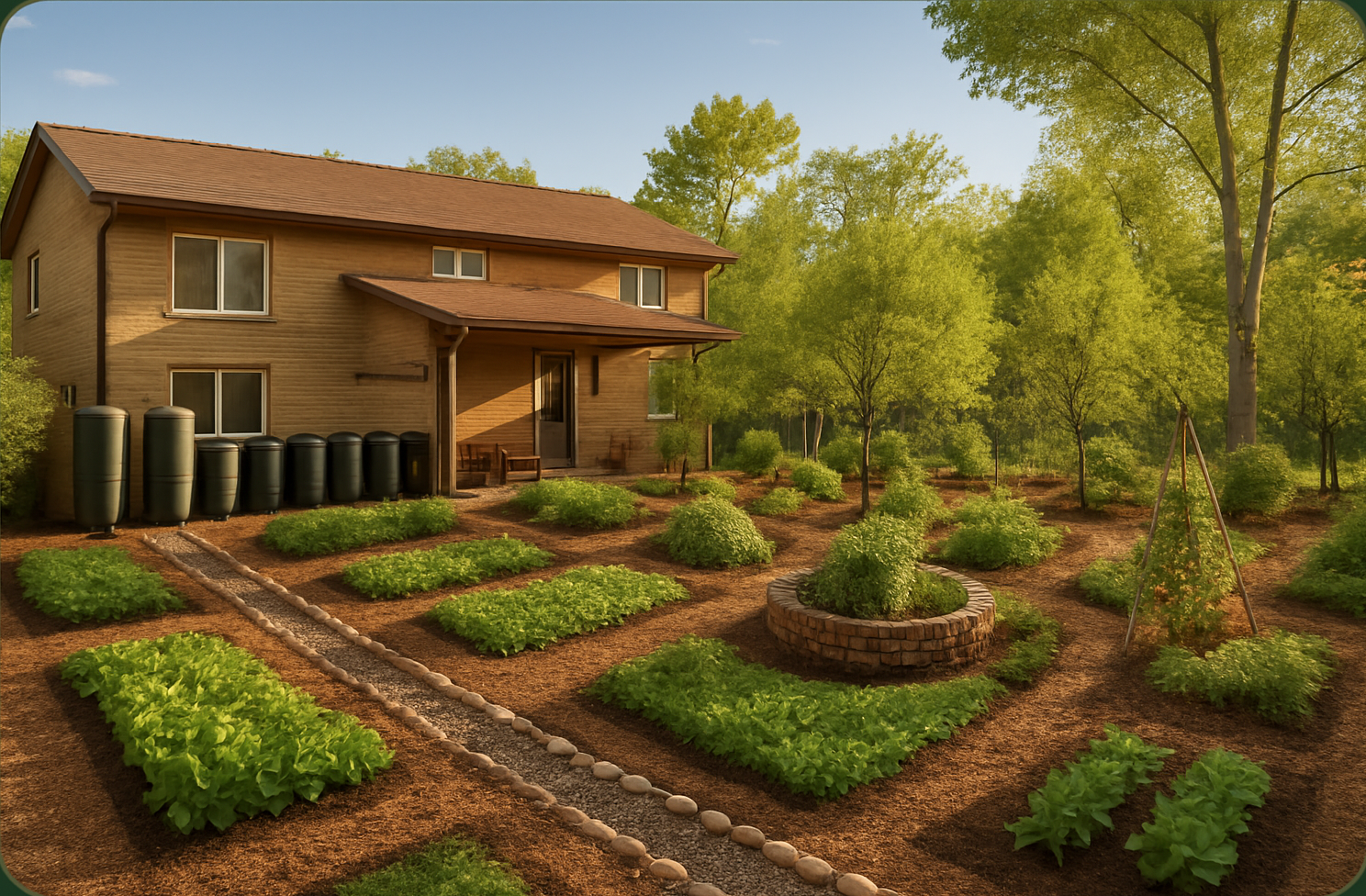
Permaculture is a design system for growing food and managing land the way natural ecosystems do — and the clearest way to understand it is through real examples. Below are fifteen concrete examples, from a single garden bed to famous farms that have regreened deserts. Each one shows a core principle in action: catch and store water, build soil, stack functions, and let the system do more of the work over time. If you want the framework behind them first, our guide to what permaculture is covers the ethics and principles these examples put into practice.
Permaculture isn't a single technique. It's a way of arranging plants, water, animals, and structures so the parts support each other. These examples span three scales — a home backyard, a working farm, and a small urban space — so you can see the same ideas repeat wherever you have room to grow something.
Backyard & home permaculture examples
Most people first meet permaculture in their own yard. These eight examples are the ones you're most likely to build yourself, and several can share the same small space.
-
Food forests. A multi-layered edible garden mimics a young woodland, with tall fruit or nut trees, smaller trees and shrubs beneath them, herbs and vegetables at ground level, and vines climbing through. Once established, it produces food year after year with far less work than an annual vegetable plot, because the layers shade out weeds and feed the soil themselves.
-
Herb spirals. An herb spiral is a compact, waist-high mound of soil coiled into a spiral, usually just a few feet across. The height and orientation create microclimates: dry, sunny herbs like rosemary and thyme sit near the top, while moisture-loving ones like mint and parsley grow in the cooler, damper base. It packs a full kitchen herb garden into a footprint the size of a bathtub.
-
Chicken tractors. A chicken tractor is a movable, bottomless coop that you slide across the yard every day or two. The birds scratch up a patch of ground, eat weeds and pests, and drop manure, then move on before they damage the soil. It turns chickens into a rotating team of tillers, weeders, and fertilizer spreaders that prepare beds for planting.
-
Compost systems. Composting is permaculture's most basic loop: kitchen scraps and yard waste go in, finished soil comes out, and nothing leaves the property. Whether you use a simple pile, a bin, or a worm box, turning waste into fertile soil closes the nutrient cycle and cuts your need for bought inputs. Many designs sit the compost right next to the garden it feeds.
-
Rain gardens. A rain garden is a shallow planted depression placed where runoff naturally collects — at the base of a downspout or the low corner of a yard. It catches storm water, lets it soak slowly into the ground instead of rushing to the storm drain, and grows plants that thrive in the occasional flooding. The result is less erosion, a recharged water table, and a garden that waters itself when it rains.
-
Guild planting. A guild is a small group of plants chosen to support each other, often clustered around a fruit tree. One plant might fix nitrogen, another repels pests, a third attracts pollinators, and a ground cover keeps moisture in. Designing these plant partnerships around a central tree means each member does a job so you don't have to.
-
Sheet mulching. Also called lasagna gardening, sheet mulching builds a new garden bed by layering cardboard, compost, and organic matter directly on top of existing grass or weeds. There's no digging — the layers smother what's below and rot down into rich soil. It's often the very first thing people try, and the same mulching approach that suppresses weeds and holds moisture keeps working long after the bed is planted.
-
Greywater systems. A greywater system reroutes the gently used water from sinks, showers, and laundry to irrigate the landscape instead of sending it down the sewer. A simple version pipes laundry water to a mulched basin around a fruit tree. It reuses a resource most homes throw away, which matters enormously in dry regions.
Water & earthworks examples
Water is the backbone of permaculture design. The next four examples reshape the land itself so rain is slowed, spread, and sunk into the soil rather than lost.
-
Swales. A swale is a shallow ditch dug precisely level along the contour of a slope, with the excavated soil mounded on the downhill side. When it rains, water fills the ditch and soaks sideways into the hillside instead of running off. Swales are one of the most powerful tools for capturing and storing rainwater in the ground, and trees planted along them tap that stored moisture through dry spells.
-
Hugelkultur. Hugelkultur is a raised bed built over a buried core of logs and woody debris. As the wood slowly decomposes, it acts like a sponge — holding water and releasing nutrients for years — while generating gentle warmth that extends the growing season. A hugelkultur mound can go remarkably long between waterings once the wood inside is saturated.
-
Keyline design. Keyline is a whole-property planning method that reads the natural shape of a landscape's ridges and valleys, then plows and plants along specific lines to spread water evenly across the land. Instead of letting rain concentrate in the valleys and leave the ridges dry, keyline nudges moisture outward toward the drier high ground. It's a farm-scale way of making every acre hold more water.
-
Rain barrels. The simplest water example is a barrel under a downspout. It captures roof runoff during a storm and stores it for watering the garden later. A single rain barrel is modest, but linked in a series they store hundreds of gallons — an easy on-ramp to thinking about water as a resource to keep rather than shed.
Whole-farm & famous examples
These larger examples show what the same principles do at scale, and they're worth knowing because they've shaped how permaculture is taught worldwide.
-
Zaytuna Farm (Geoff Lawton, Australia). Zaytuna is a well-known demonstration and teaching farm run by educator Geoff Lawton. It's a living catalog of permaculture earthworks — extensive swales, ponds, and food forests carved into the landscape — and much of what home gardeners learn online traces back to techniques demonstrated there.
-
Krameterhof (Sepp Holzer, Austria). High in the Austrian Alps, Sepp Holzer transformed a steep, cold mountain farm into a productive patchwork of terraces, ponds, and hugelkultur beds. He is famous for growing fruit and even warmth-loving plants at altitudes and in climates where conventional wisdom says they shouldn't survive, largely by using water and stone to create warm microclimates.
-
The Loess Plateau restoration (China). On China's Loess Plateau, a massive restoration effort rebuilt an eroded, degraded landscape roughly the size of a small country using terracing, tree planting, and grazing management. Barren, gullied hills were brought back to green productivity — one of the largest real-world demonstrations that damaged land can be regenerated with careful design.
-
New Forest Farm (Mark Shepard, USA). Mark Shepard converted a worn-out Wisconsin corn farm into a commercial-scale perennial food system, planting chestnuts, hazelnuts, fruit, and grazing animals in patterns modeled on natural savanna. It's an influential example of permaculture producing staple crops at farm scale, not just backyard vegetables.
Urban & small-space examples
You don't need land to practice permaculture. These final examples work in apartments, on rooftops, and in shared city spaces.
-
Balcony and container gardens. On a balcony, permaculture becomes a matter of stacking and pairing: herbs and greens in containers, a small trellis for climbers, and pots grouped so taller plants shelter shorter ones. Even here you can pair plants that help each other, applying the same companion planting logic that works in a full garden bed, just in miniature.
-
Community food forests and vertical growing. In cities, neighbors turn vacant lots and park edges into shared food forests that anyone can harvest, while vertical growing — living walls, stacked planters, and trellised vines — squeezes production out of tight footprints. Both show the permaculture instinct to use every layer of space and turn underused ground into something that feeds people.
Fifteen examples, three scales, one pattern: catch water, build soil, and let each element do more than one job. Start with a single sheet-mulched bed or a rain barrel, and you're already practicing permaculture. When you're ready to design a whole property that ties these pieces together — water, soil, food, and structures working as one system — our regenerative property design service can help you map it out and build it, whether that's a Colorado installation or a complete guide for doing it yourself anywhere in the country.
Frequently asked questions
What is the simplest example of permaculture to start with?
Sheet mulching a garden bed is the easiest place to begin. You layer cardboard and organic matter directly on the ground to smother weeds and build soil, with no digging required. It costs almost nothing, works in a weekend, and teaches the core permaculture habit of working with natural processes instead of against them.
Is permaculture only for large rural properties?
No. Permaculture is a set of design principles, not a property size. A balcony herb garden, a suburban food forest, and a 100-acre farm can all be permaculture — what matters is that the design stacks functions, cycles resources, and mimics natural systems. Many of the most instructive examples fit in a single backyard.
How is permaculture different from regular organic gardening?
Organic gardening is mostly about how you grow (no synthetic chemicals). Permaculture is about how you design the whole system so its parts support each other — placing plants, water, animals, and structures so waste from one becomes food for another. Organic methods are usually part of a permaculture design, but permaculture goes further into water flow, soil building, and long-term self-maintenance.
Related guides
Carbon sinks, explained
What a carbon sink is, clear examples, and how your yard can become one.
How to grow your own food
A practical guide to growing real food security in your own backyard.
How to build healthy soil
Five regenerative practices that turn tired dirt into living soil — and the soil-food-web biology that most gardening guides leave out.
Want this designed into your land?
We design regenerative food forests — living soil, water, and plants working together — done-for-you in Colorado and guided nationwide.
Book your Eden Yard Audit™