Guide
What is a food forest?
June 28, 2026 · 7 min read
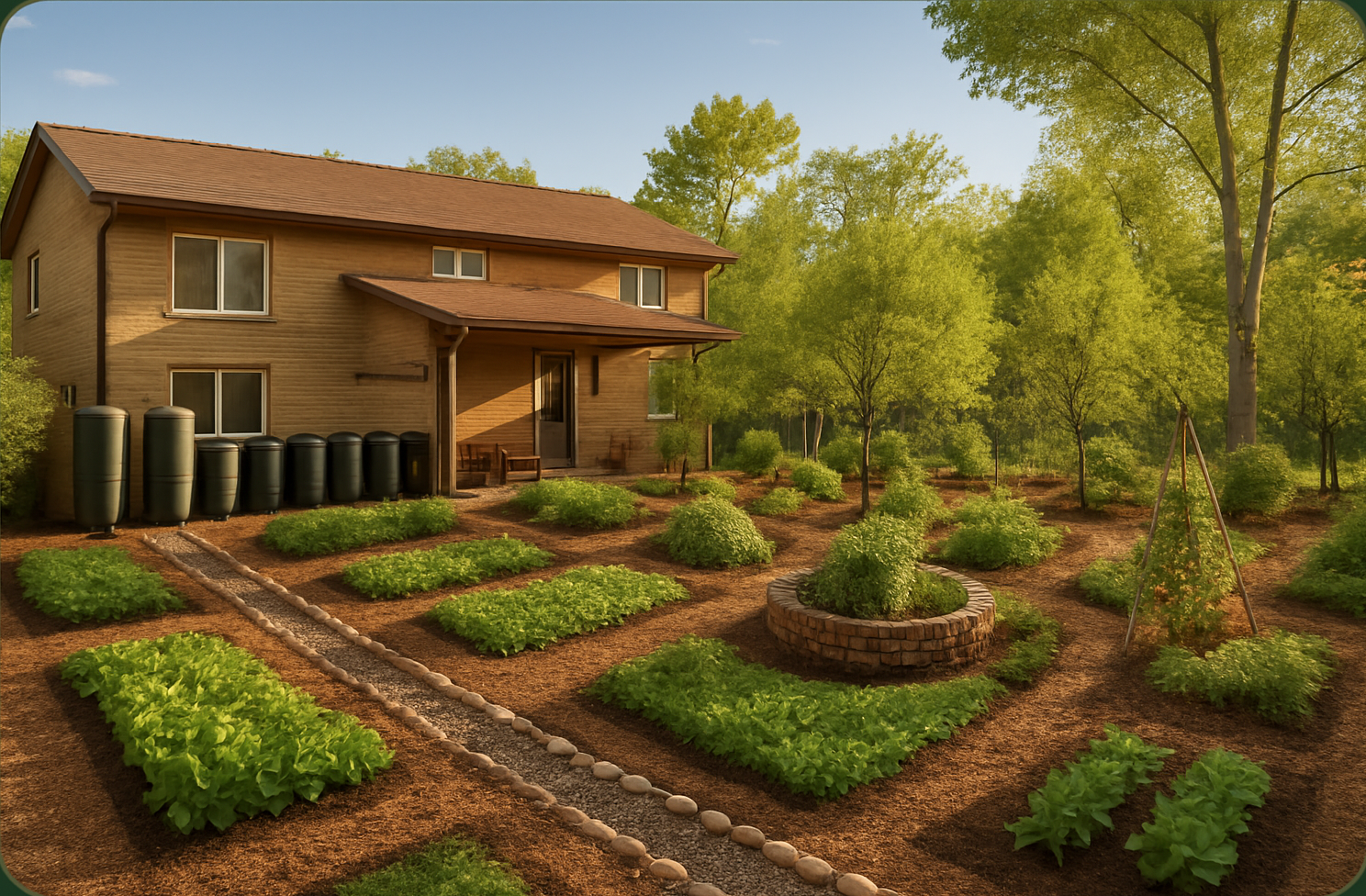
A food forest is a self-sustaining, edible ecosystem designed to mimic a natural woodland — but every plant is chosen to feed people, pollinators, or the soil. Instead of rows of annual vegetables that you replant from bare ground each spring, a food forest layers perennial trees, shrubs, herbs, groundcovers, roots, and vines into a single cooperating system that gets more productive and less demanding every year as it matures. It is one of the oldest and most resilient ways humans have ever grown food — and one of the most promising answers to tired soil, rising water costs, and fragile food supply. This guide explains exactly what a food forest is, how it works, and how to start one.
A food forest, defined
A food forest — also called a forest garden or edible forest garden — is a deliberately designed planting that copies the structure of a young, healthy forest. In a wild woodland, plants grow in overlapping layers from the canopy down to the roots, and the whole system runs itself: it builds its own soil, captures its own water, and needs no one to till, fertilize, or replant it. A food forest borrows that structure and swaps in productive species at every level, so you get the forest's self-sustaining resilience and a harvest of fruit, nuts, berries, herbs, and vegetables.
The key word is ecosystem. A food forest is not just a collection of fruit trees with some plants underneath — it is a community of species chosen so they support one another. The trees create shade and microclimate; the shrubs and groundcovers protect and feed the soil; deep-rooted plants mine nutrients and bring them to the surface; flowers draw in pollinators and beneficial insects. Designed well, the system handles much of its own fertility, pest control, and weed suppression, which is why a mature food forest needs a fraction of the work of a conventional garden of the same size. It is the flagship technique of the wider permaculture design system applied specifically to growing food — food forest permaculture, in a phrase — a way of designing an edible landscape that largely runs itself.
Food forest vs. forest garden — the same idea
If you have read about this concept before, you have probably seen it called a forest garden rather than a food forest. They mean the same thing. "Forest garden" is the older British term, popularized by Robert Hart, while "food forest" became the common name in North America and in permaculture circles. You may also see edible forest garden or forest gardening — all describe the same practice: a deliberately layered, perennial, edible ecosystem modeled on a young woodland. Whichever name you use, the design principles in this guide are identical.
The seven layers of a food forest
The defining feature of a food forest is stacking — growing in vertical layers so the same patch of ground produces food from the canopy all the way down to the roots. A complete food forest design weaves together seven layers:
- Canopy — full-size fruit and nut trees (apple, pear, chestnut, walnut) that anchor the system and set its microclimate.
- Understory — dwarf and semi-dwarf fruit trees (peach, plum, cherry, mulberry) that thrive in the dappled light beneath the canopy.
- Shrub — berry bushes and productive shrubs: blueberries, currants, gooseberries, elderberry, hazelnut.
- Herbaceous — perennial vegetables, culinary and medicinal herbs, and pollinator plants that return each year.
- Groundcover — living mulch like strawberries, clover, and creeping thyme that shades the soil and crowds out weeds.
- Root / rhizosphere — the underground layer of tubers, bulbs, and deep-rooted plants that mine nutrients and feed the soil life.
- Vine / vertical — climbers such as grapes, hardy kiwi, and passionflower that use vertical space woven through the structure.
Not every food forest uses all seven layers, and on a small lot they are simply stacked more tightly with dwarf rootstocks and trellising. But the principle is what makes a food forest so productive: by filling every level, you harvest far more food per square foot than a single-layer lawn, orchard, or vegetable bed ever could.
How a food forest is different from a garden or an orchard
It helps to see what a food forest is not. A vegetable garden is mostly annuals grown in the open, in rows or beds, and reset to bare soil every year — high yield, but high, repeating labor. An orchard is usually a single layer of fruit trees grown in mowed grass, which competes with the trees and produces nothing else. A food forest combines the best of both and removes their weaknesses: it is perennial like an orchard but layered and diverse like a garden, so it produces continuously, builds soil instead of depleting it, and demands less work over time rather than more.
How a food forest actually works
Underneath the harvest, a food forest runs on four ecological engines that a good design sets in motion:
Living soil. A food forest is built on the soil food web — the bacteria, fungi, and the creatures that graze on them that cycle nutrients to plant roots. Heavy mulch and diverse perennials feed that biology, and it feeds the plants in return, for free, year after year. (If you want to go deeper on this, see our guide on how to build healthy soil.)
Water by design. Rather than irrigate against the climate, a food forest is shaped to capture and hold water — swales and basins that sink rainfall into the ground, plus mulch and shade that keep moisture in the soil. Pair it with rainwater harvesting and the system increasingly hydrates itself.
Plant guilds. Plants are grouped into guilds — small communities where each member does a job. A fruit-tree guild surrounds the tree with nitrogen-fixers that feed it, dynamic accumulators that mine deep nutrients, pollinator flowers, and groundcovers that protect the soil. Designing these relationships is what makes the system resilient and low-maintenance.
Succession. A food forest is planted as a young system and grown into maturity. Fast plants fill in and protect the soil early; the trees take their time and eventually take over. A good design plans for this arc so the system is productive at every stage.
The benefits of a food forest
Put those engines together and the payoff is substantial. A food forest produces a deep, diverse harvest — fruit, nuts, berries, herbs, and perennial vegetables — across a long season rather than a single summer glut. It rebuilds living soil instead of depleting it. It conserves water and drought-proofs your land. It creates habitat for pollinators and beneficial wildlife. It needs less work, fewer inputs, and less money over time. And because it is built mostly from long-lived perennials, it is a genuine legacy — a productive landscape planted once that can feed a family for generations. A well-planned system is even designed to create potential harvest value and income opportunities by year three, depending on property size, crop selection, market access, and how much you choose to participate.
Conventional landscape vs. food forest
| Conventional landscape | Food forest | |
|---|---|---|
| Plants | Mostly annuals or ornamental | Perennial, layered, edible |
| Output | Looks only, or one crop | Diverse food, long season |
| Over time | Degrades; needs more inputs | Improves; needs less work |
| Soil | Depleted by tilling & chemicals | Living soil, rebuilt by design |
| Water | High, ongoing irrigation | Harvests rain; self-hydrating |
| Value | A cost center | A regenerative, productive asset |
Food forests at any scale — urban to rural
One of the best things about food forests is that they work on any land. A city lot becomes a layered edible courtyard. A suburban backyard becomes a productive orchard-garden. Open rural acreage becomes a full homestead food system with water harvesting, structures, and animals woven into the plan. The seven layers and the four engines are the same at every scale; only the plant palette and the footprint change. You do not need a farm to grow a food forest — you need a design that fits the land you already have.
How to start a food forest
Starting a food forest comes down to a sequence: read your site (climate, water, sun, slope, and soil), design the layout and the seven layers around it, build the soil and water foundation first, then plant from the canopy down and let the system establish. The single biggest factor in whether a food forest thrives or struggles is how well the design fits your specific site — which is exactly what a generic plant list off the internet cannot do.
That is the work we do. Our food forest design service maps your land and delivers a custom, to-scale plan — done-for-you in Colorado, or as a complete design-and-build-guide package anywhere in the country. Whether you start with a single guild or a whole property, the principle is the same: plant a living system once, and let it feed you for decades.
Frequently asked questions
What is the difference between a food forest and a garden?
A conventional garden is mostly annual vegetables that must be replanted from bare soil every year, in dedicated rows or beds. A food forest is built from perennial plants arranged in cooperating vertical layers — trees, shrubs, herbs, groundcovers, roots, and vines — so it largely replants and feeds itself, needs less work each year, and produces a wider variety of food over a much longer season.
How big does a food forest need to be?
Any size. A food forest is a design pattern, not a footprint. The same seven layers can be stacked into a small urban backyard using dwarf trees and vertical space, or spread across acres on a rural homestead. Even a few hundred square feet can hold a productive, multi-layered system.
How long does a food forest take to establish?
Herbs, perennial vegetables, and groundcovers produce in the first season; berry shrubs in one to three years; and fruit and nut trees over roughly three to seven years. A well-designed food forest is planted so you harvest something at every stage while the canopy matures, with total yield climbing each year as the system establishes.
Is a food forest hard to maintain?
The first two to three years of establishment take real attention — watering, mulching, and weeding while plants root in. After that, a mature food forest is far lower-maintenance than a lawn or annual garden: perennials replace replanting, groundcovers and mulch suppress weeds, and the soil food web handles much of the fertility on its own.
Can you grow a food forest in a cold or dry climate?
Yes. Food forests thrive everywhere from the tropics to cold, arid regions — the plant palette and water strategy simply change. Cold climates lean on hardy fruit, nut, and berry species and protective microclimates; dry climates lead with water-harvesting earthworks and drought-tolerant perennials. The design is always matched to the site.
Related guides
What is permaculture?
The complete plain-English guide to permaculture — what it is, where it came from, its ethics and principles, its core techniques, and how to use it on your own land.
Companion planting
How companion planting really works, proven pairings to use, what to keep apart — and how perennial plant guilds take the idea further in a food forest.
Permaculture for beginners
What permaculture actually is, its core ethics and principles, and a simple, beginner-friendly path to start designing a regenerative landscape.
Want this designed into your land?
We design regenerative food forests — living soil, water, and plants working together — done-for-you in Colorado and guided nationwide.
Book your Eden Yard Audit™