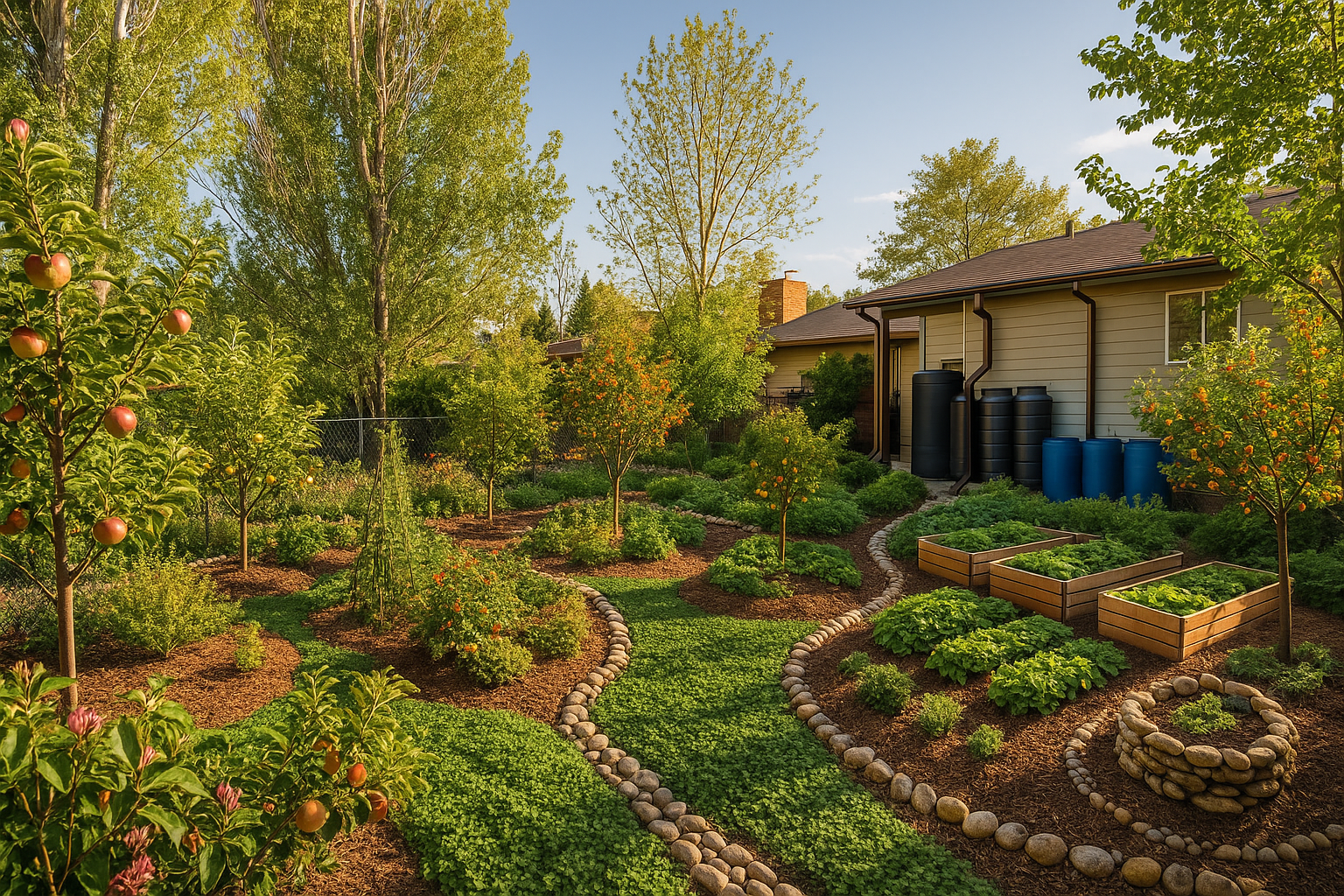
Edible landscapingis the art of designing a yard with plants you can eat — fruit and nut trees, berry shrubs, perennial vegetables, herbs, and edible groundcovers — arranged to be every bit as beautiful as a conventional ornamental landscape. It rejects the false choice between a pretty yard and a productive one. Done well, an edible landscape has the structure, color, and curb appeal of any premium design, and it hands you fruit, herbs, and vegetables right outside your door. Here's how it works, and how Restore Eden designs one for your home.
Edible landscaping vs. ornamental landscaping
A conventional landscape is chosen for looks alone — lawn to mow, shrubs to trim, and ornamentals that produce nothing but yard waste while drinking water and demanding chemicals. Edible landscaping keeps the beauty and adds a harvest. The key insight is that food plants are gorgeous: an apple tree in bloom rivals any ornamental, blueberry foliage turns brilliant red in fall, lavender and rosemary make fragrant evergreen hedges, and a bed of strawberries is a better groundcover than most. You are not giving up a beautiful yard — you are upgrading it into one that also works for your family.
Every part of your yard has an edible upgrade
The simplest way to picture edible landscaping is as a swap: nearly every ornamental element in a typical yard has a beautiful, edible counterpart that fills the same design role. A good design makes these substitutions intentionally, so the structure of the landscape stays intact while the plant palette starts feeding you.
| Conventional element | Edible upgrade |
|---|---|
| Shade tree | Apple, pear, cherry, or chestnut |
| Flowering shrub | Blueberry, currant, or elderberry |
| Foundation hedge | Rosemary, lavender, or seaberry |
| Ornamental grass | Perennial greens & culinary herbs |
| Groundcover / mulch bed | Strawberries, thyme, clover |
| Trellis / vine | Grapes, hardy kiwi, hops |
Designed to look intentional — and pass the HOA
The difference between an edible landscape that looks lush and one that looks unkempt is entirely in the design. We build edible landscapes with the same principles as any premium yard: clear structure and focal points, defined bed edges, a considered color and texture palette through the seasons, and tidy, accessible layouts. The result reads as beautiful, deliberate landscaping to any neighbor or HOA — it simply happens to be productive. This is regenerative design done as luxury, not as a scruffy vegetable patch.
Edible landscaping for the arid West
In dry climates like Colorado's Front Range, edible landscaping and water-wise design are natural partners. We lead with drought-tolerant edible species — many fruits, herbs, and perennials need far less water than a lawn once established — and pair them with rainwater harvesting and earthworks that hydrate the soil from the rain that already falls. The outcome is a beautiful, productive yard that uses a fraction of the water a conventional landscape demands.
Low-maintenance by design
An edible landscape built mostly from perennials is far less work than a lawn once it establishes. Perennials replace the annual replanting treadmill; groundcovers and mulch suppress weeds; and a living, healthy soil feeds the plants on its own. The trade is a couple of seasons of establishment in exchange for years of low-maintenance abundance. (See our guide on how to build healthy soil for the foundation it all rests on.)
From a single bed to the whole yard
Edible landscaping scales to whatever you're ready for. You can convert one ornamental bed, replace a thirsty front lawn, or transform an entire property into a layered food forest. We design at whatever scope fits your goals and budget, and we can phase the work so it grows over time.
How we design your edible landscape
Every project starts with an Eden Yard Audit: we study your site, climate, soil, and the look you want, then design a custom, to-scale plan that balances beauty and harvest. From there we install it for you across the Colorado Front Range, or hand your team complete build guides anywhere in the country — and your yard becomes a landscape you can actually eat from.