
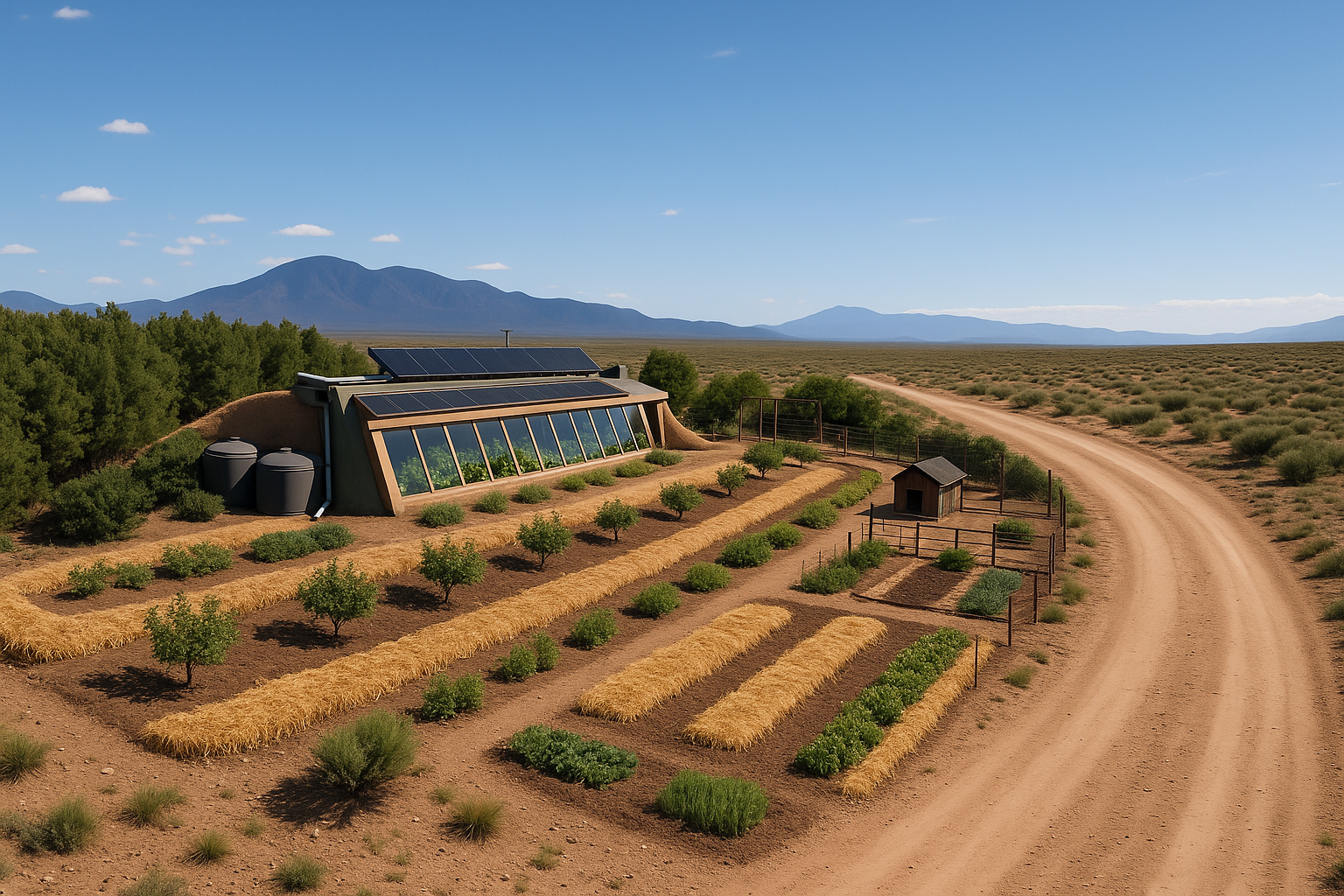
Rainwater harvestingis the practice of capturing the rain that falls on your property — off the roof, the patio, and the land itself — and storing or directing it so your landscape can use it, instead of letting it run off to the storm drain. Done well, it turns a free, recurring resource into the backbone of a resilient, water-wise property: lower bills, drought protection, healthier soil, and plants that thrive through dry summers. Here's how a complete system works, and how Restore Eden designs and installs one for your land.
How a rainwater harvesting system works
Every system, from a single rain barrel to a full cistern setup, is built from the same four parts. A good design sizes and connects them to your specific roof, rainfall, and goals:
Catchment
The surfaces that collect rain — most often your roof, but also patios, driveways, and the land itself. A 1,000 sq ft roof yields roughly 600 gallons per inch of rain.
Conveyance
Gutters, downspouts, and a first-flush diverter that routes clean water to storage and sends the dirty first rinse away from your tanks.
Storage
Rain barrels, above- or below-ground tanks, or cisterns sized to your roof, your rainfall, and how you intend to use the water.
Distribution
Gravity-fed lines, drip irrigation, or overflow routed into swales and garden beds so every drop ends up in the soil where it's needed.
Types of rainwater harvesting systems
“A rainwater harvesting system” can mean anything from a single barrel to a buried cistern feeding a whole homestead. Choosing the right type is the first real decision in any installation — it comes down to how much water you want on hand, how much space you have, and your budget.
Rain barrels
The simplest entry point — 50–110-gallon barrels under a downspout for hand-watering nearby beds. Cheap, fast, and legal in Colorado up to two barrels / 110 gallons.
Above-ground tanks
Slimline or round poly tanks from a few hundred to several thousand gallons. Easy to install and inspect, and a natural fit where you have room along a wall or fence.
Underground cisterns
Buried tanks that store thousands of gallons out of sight and out of the sun — the highest-capacity option, and the right call for larger properties and homesteads.
Passive earthworks
Swales, basins, and mulch that store water in the soil itself instead of a tank — the most drought-proof, lowest-maintenance 'system' of all, and the backbone in the arid West.
Most systems store rain for non-potable use — irrigation, gardens, and outdoor washing — which keeps the design simple. Making harvested rain safe to drink (potable) is possible but adds serious filtration, disinfection, and code requirements, so it's a specialized build. For nearly every property we design, harvested rain earns its keep first and best in the landscape.
The rainwater harvesting system installation process
A professional installation follows the same sequence whether it's a two-barrel setup or a multi-tank system. Getting the order — and the details — right is what separates a system that quietly works for decades from one that leaks, overflows, or grows algae:
Assess & size the system
We measure your roof and catchment area, pull your local rainfall, and size storage to how you'll actually use the water — so the system is neither undersized nor overbuilt.
Prep catchment & conveyance
Gutters and downspouts are cleaned or added and routed toward the storage location, with screens to keep leaves and debris out of the flow.
First-flush & filtration
A first-flush diverter sends the dirty first rinse of each storm away from the tanks, and inlet filters keep stored water clean.
Set the storage
Barrels, tanks, or a cistern are placed on a level, load-rated base — critical, since water weighs about 8.3 lbs per gallon — and plumbed to the inflow.
Distribution & overflow
Outlets feed gravity lines or drip irrigation, and the overflow is routed into swales and garden beds so even a full tank never wastes a drop.
Commission & hand off
We test the full system through a simulated flow, then either maintain it for you in Colorado or hand your team the guide and a maintenance schedule.
What a rainwater harvesting system costs
Installation cost tracks almost entirely with storage capacity and how much of the work is done for you. A DIY rain-barrel setup is a couple hundred dollars in parts. A professionally installed above-ground tank system for a typical home generally lands in the low-to-mid four figures once you include the tank, first-flush and filtration, a proper base, and distribution. A large underground cistern for a homestead is a bigger, engineered investment — but it also stores the most water and disappears from view. Passive earthworks and living soil are the value leader: for relatively little, swales and mulch bank thousands of gallons in the ground itself. We scope every system to your roof, rainfall, and budget, so you buy exactly the capacity your property can use — not a drop more.
Passive and active harvesting — use both
There are two ways to harvest rain, and the most resilient properties use them together. Active harvesting stores water in barrels, tanks, or cisterns for on-demand use. Passive harvesting reshapes the land itself — with swales (shallow, level trenches on contour), basins, and heavy mulch — so rainfall slows down and soaks into the soil exactly where plant roots can reach it. Tanks give you stored water you can direct; earthworks hydrate the whole landscape and recharge the ground. A well-designed system layers both, so almost nothing leaves your property as runoff.
Why harvest rainwater
Across the arid West especially, water is the single biggest constraint on a thriving landscape — and the most expensive line on a summer utility bill. Harvesting rain attacks that on every front. It cuts the amount of treated municipal water you pour on your yard. It drought-proofs your garden by storing and sinking water for the dry stretches. And rainwater is simply better for plants than tap water — it's soft, oxygenated, and free of the chlorine and salts that build up in soil over years of irrigation. Most importantly, it keeps water on your land, building soil and resilience instead of washing your topsoil toward the storm drain.
How much water can you actually collect?
More than most people expect. The rule of thumb: a roof sheds about 600 gallons per 1,000 square feet of footprint, per inch of rain (roughly 0.6 gallons per square foot per inch). A 1,500-square-foot roof in a place that gets just 15 inches of rain a year can shed more than 13,000 gallons annually. That water is falling on your property for free every storm — rainwater harvesting is simply the decision to catch it and use it rather than send it down the gutter.
Rainwater harvesting in Colorado & the arid West
Colorado has specific rules worth knowing: residential properties may store rainwater in up to two rain barrels totaling 110 gallons, for outdoor use on the same property. Larger stored systems and other uses can involve water-rights considerations. That sounds limiting, but it isn't the whole picture — a great deal of harvesting can be done passively, by shaping the land to slow and sink rain into the soil, which is treated differently than storing it in tanks. We design every system to work within the rules that apply to your property, leaning on earthworks and soil to do much of the heavy lifting in the arid West.
Irrigating from the tap vs. harvesting rain
| Tap irrigation only | Rainwater harvesting | |
|---|---|---|
| Cost | Rises every season | Free rain, falling cost over time |
| Drought | First thing restricted | Stored + soaked-in reserves |
| Water quality | Chlorine & salts build up in soil | Soft, clean, plant-friendly |
| Your land | Topsoil & runoff lost to the drain | Water & soil kept on site |
| Resilience | Dependent on the utility | Buffered by your own supply |
How we design & install your system
Rainwater harvesting works best when it's designed as part of the whole landscape — which is exactly how we approach it, as one piece of a whole-property regenerative plan. We start with an Eden Yard Audit: we measure your roof and catchment, study your rainfall and how water moves across your site, and map where it should go. From there we design the full system — catchment, conveyance, storage, and the earthworks and beds the overflow feeds — and either install it for you across the Colorado Front Range or hand your team complete build guides anywhere in the country. It's the same water strategy that anchors every food forest design we create.