
Guide
Permaculture plant guilds
June 30, 2026 · 6 min read
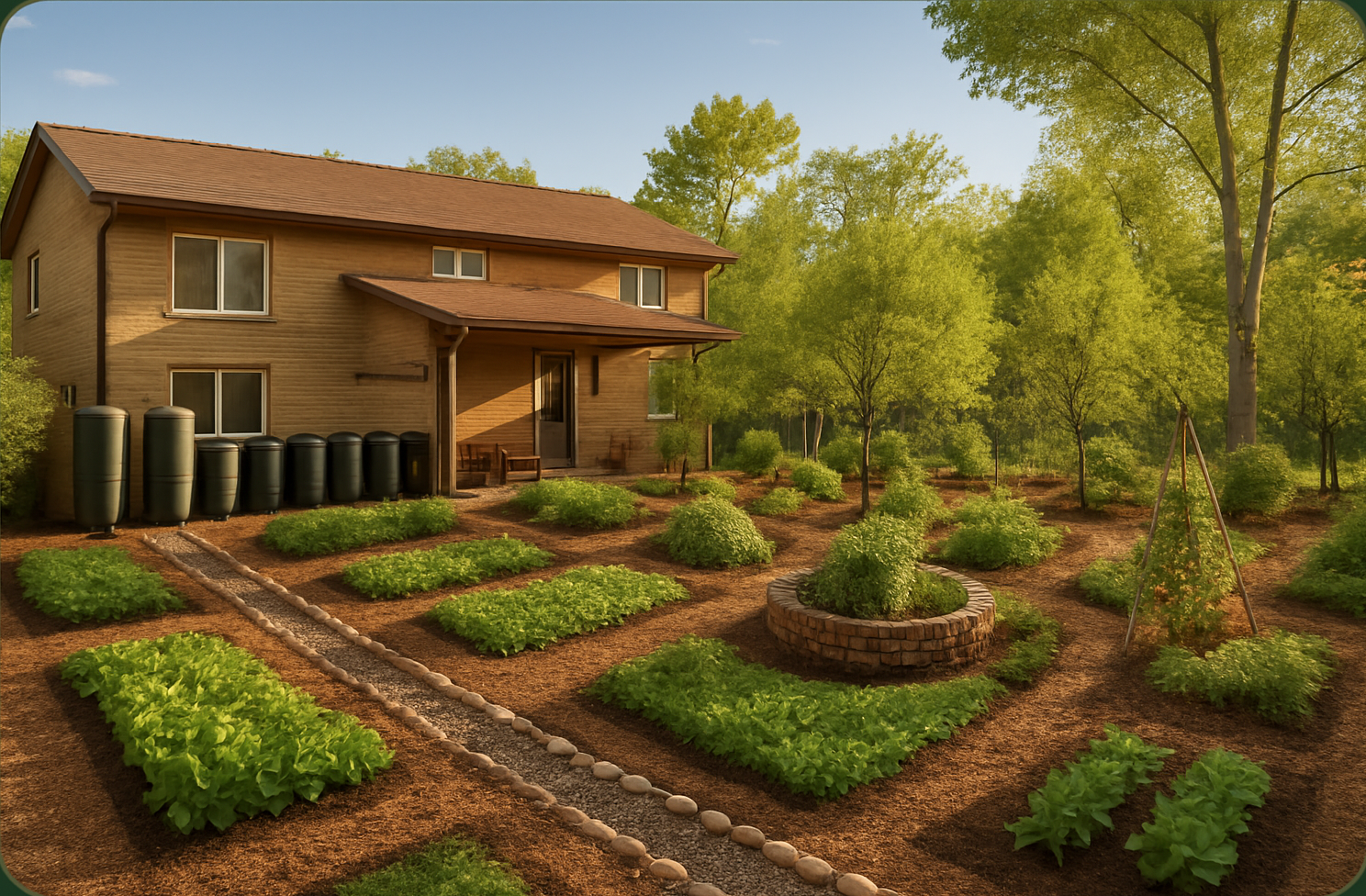
A permaculture plant guild is a small, self-supporting community of plants grouped around a central element—almost always a fruit or nut tree—where each plant does a specific job that helps the others thrive. Instead of a lone tree surrounded by bare mulch or mown grass, you build a little ecosystem: one plant feeds the soil, another draws in pollinators, another keeps pests confused, and another shades out weeds. Done well, a guild waters itself less, feeds itself, and needs far less of your labor over time. Guilds are one of the core building blocks of the permaculture design approach — this guide zooms all the way in on how to build one.
The idea comes from observing how healthy forests actually grow. Nothing in a woodland stands alone. Trees, shrubs, herbs, and groundcovers stack together in layers and lean on each other. A guild is simply that pattern, borrowed and arranged on purpose in your yard.
What a plant guild actually is
Think of a guild as a team, not a collection. Every player has a position.
At the center sits the anchor—typically a fruit tree such as apple, pear, plum, or peach. Everything else is chosen to support that tree and the ground around it. The supporting plants are perennials wherever possible, so the system matures and stabilizes instead of resetting every year.
This is the building block of a larger edible forest garden. Plant one guild and you have a productive island. Plant several and let them knit together, and you have the beginnings of a full multi-layer food forest.
The roles in a guild
The magic of a guild is in the roles, not the specific plants. Once you understand the jobs that need filling, you can swap in whatever species suit your climate. Here are the core functions.
-
Nitrogen fixers. These plants pull nitrogen from the air and make it available in the soil, cutting your need for fertilizer. Clover, vetch, lupine, and false indigo are common choices; larger guilds sometimes use nitrogen-fixing shrubs like Siberian pea shrub or seaberry.
-
Dynamic accumulators. Deep-rooted plants that mine minerals from far below the surface and bring them up into their leaves. When those leaves die back or get cut, the nutrients feed the topsoil. Comfrey is the classic example; yarrow, dandelion, and borage do similar work.
-
Mulchers and chop-and-drop plants. Fast, leafy growers you cut a few times a season and drop right on the ground as living mulch. Comfrey again shines here, along with rhubarb and hardy perennial grasses. This is one of the simplest ways to keep feeding the soil without hauling in compost.
-
Pest confusers and repellers. Strong-smelling plants that mask the scent of your fruit tree or deter specific pests. Alliums—chives, garlic, and ornamental onions—are the workhorses here, and many gardeners tuck them right around the trunk.
-
Pollinator attractors. Flowering plants that draw bees and beneficial insects in to pollinate the tree and prey on pests. Think of these as the recruiting arm of a good pollinator planting: dill, fennel, calendula, and native wildflowers all pull their weight.
-
Groundcovers and living mulch. Low, spreading plants that blanket the soil, hold moisture, and crowd out weeds so grass can't creep back in. Strawberries, creeping thyme, white clover, and nasturtium all cover ground while giving you something extra.
-
The central element. The tree itself—the reason the guild exists. Choose it first, matched to your climate and your taste, because everything else is arranged in service of it.
Many of the best plants wear more than one hat. Comfrey is an accumulator, a mulcher, and a pollinator plant all at once, which is exactly why it turns up in nearly every guild.
A worked example: the apple-tree guild
The apple guild is the textbook starting point, and for good reason—it's forgiving, productive, and shows every role in action. Here's how the classic version fits together, plant by plant.
The apple tree sits at the center. A dwarf or semi-dwarf rootstock keeps it in reach for picking and pruning and lets the guild fit a normal yard. Apples happen to be one of the more reliable fruit trees for a home orchard, which is part of why this guild is so widely copied.
Comfrey forms a ring inside the drip line. Its deep taproot hauls up potassium and other minerals, and you chop its big leaves two or three times a season and drop them at the base of the tree as mulch and slow-release fertilizer.
Daffodils ring the trunk. Their bulbs and foliage form a natural barrier that discourages voles and grass from encroaching on the root zone, and they bloom early to signal pollinators that the guild is open for business.
White clover carpets the open ground as a living mulch and nitrogen fixer, feeding the tree from below while shading out weeds. Mow or trample it occasionally and it keeps giving.
Chives and other alliums scatter around the base. Their oniony scent confuses pests looking for the apple tree, and some gardeners credit them with reducing certain fungal problems.
Yarrow adds a second dynamic accumulator and a magnet for beneficial insects like ladybugs and lacewings that eat aphids. Its ferny foliage also tolerates a bit of foot traffic.
Nasturtium trails along the edges as a groundcover and a trap crop—aphids often prefer it to your tree, pulling pests away from the fruit. Bonus: the leaves and flowers are edible.
Dill (or fennel) fills out the pollinator role, its umbrella-shaped flowers feeding hoverflies and parasitic wasps that keep pest populations in check.
Put those together and you have a tree that feeds itself, mulches itself, draws in its own pollinators, and fends off many pests—with your main job being an occasional chop-and-drop and harvest.
How to design your own guild
You don't need to copy the apple guild exactly. Use this simple sequence to build one that fits your yard.
-
Start with the tree. Pick your central element first, based on your climate zone and what you actually want to eat. Everything follows from this choice.
-
List the roles you need to fill. Nitrogen fixer, accumulator, mulch producer, pest deterrent, pollinator plant, groundcover. Write them down as a checklist.
-
Match a plant to each role. For every role, choose one or two species that grow well in your region. Aim for perennials where you can, and favor plants that fill more than one role.
-
Mind the sun and spacing. Sun-lovers go on the south and east edges; shade-tolerant plants tuck under the canopy. Give the tree room to reach its mature size before the guild fills in around it.
-
Plant, observe, and adjust. No guild is perfect on paper. Watch it for a season or two, notice where weeds break through or pests linger, and add a plant to cover the gap.
This observe-and-adjust rhythm is the heart of good regenerative property design—you're steering a living system, not installing a static landscape.
A note on climate and site fit
The role framework is universal; the plant list is not. Comfrey and clover thrive in much of the temperate world, but in a hot, dry climate you might reach for penstemon, native buckwheat, or drought-adapted alliums to do the same jobs. Always choose species suited to your zone, soil, and rainfall, then let the functions—not a fixed recipe—guide your picks.
Guild vs. companion planting
The two ideas are cousins, but they aren't the same. Companion planting usually pairs a couple of annual vegetables that help each other for a single season—tomatoes with basil, carrots with onions. A guild is bigger and more permanent: a perennial community anchored by a tree, designed to keep functioning and improving for years. Companion planting is a tactic; a guild is a small, standing ecosystem.
If you'd like help turning a bare yard into a network of productive, self-sustaining guilds, our team designs complete edible landscapes that do exactly that—and if you want the whole property mapped and installed, explore our regenerative design service.
Frequently asked questions
What is a plant guild in permaculture?
A plant guild is a group of plants deliberately assembled around a central element—usually a fruit tree—so that each member performs a useful function like fixing nitrogen, attracting pollinators, or suppressing weeds. Together they mimic a natural ecosystem and reduce the need for fertilizer, pesticides, and watering.
How many plants should be in a guild?
There's no fixed number, but a functional fruit-tree guild usually has 5 to 10 supporting species chosen to cover the key roles. Start smaller—a tree plus three or four hardworking companions—and add plants over the first few seasons as you see gaps.
What is the difference between a guild and companion planting?
Companion planting pairs two plants that benefit each other, often in an annual vegetable bed. A guild is a larger, more permanent community—typically anchored by a perennial tree or shrub—designed to function like a small ecosystem year after year.
Can I build a plant guild in a small yard?
Yes. A single dwarf fruit tree with a ring of comfrey, chives, clover, and a few flowering herbs is a complete guild that fits in a corner. Guilds scale down easily, which makes them ideal for suburban lots and even large containers.
Related guides
What is permaculture?
The complete plain-English guide to permaculture — what it is, where it came from, its ethics and principles, its core techniques, and how to use it on your own land.
The 12 permaculture principles
David Holmgren's 12 design principles and the 3 ethics behind them, each explained with a concrete example a homeowner can actually use.
Landscaping with native plants
Why native plants make the most resilient, low-water, wildlife-friendly landscapes — and how to design with them (and pair them with edibles).
Want this designed into your land?
We design regenerative food forests — living soil, water, and plants working together — done-for-you in Colorado and guided nationwide.
Book your Eden Yard Audit™