Guide
Carbon sinks, explained
July 3, 2026 · 7 min read
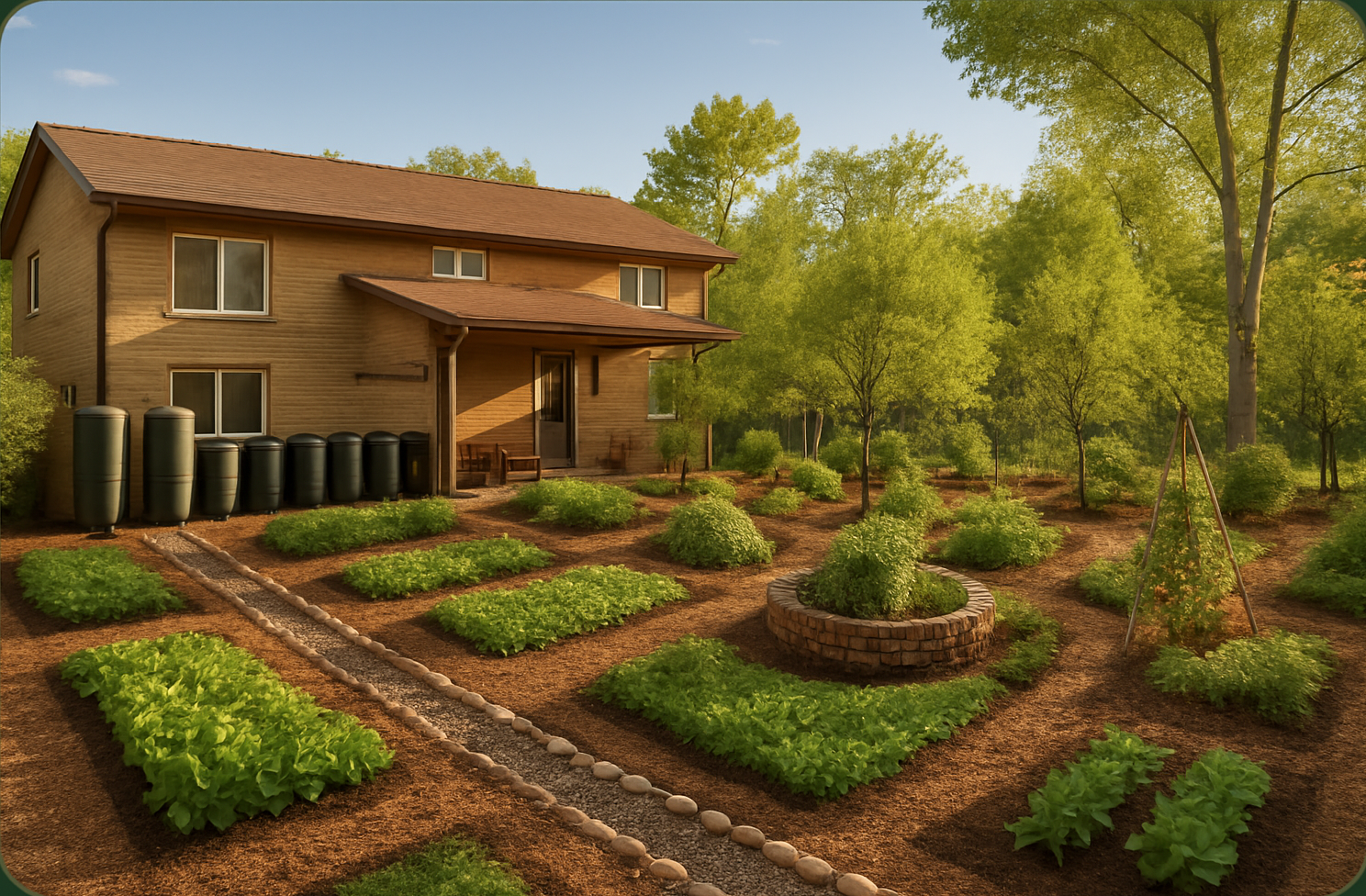
A carbon sink is any reservoir that absorbs more carbon than it releases, so on balance it pulls carbon out of the atmosphere and holds onto it.
That single idea sits underneath a lot of the climate conversation, and it's often thrown around loosely. So let's slow down and make it genuinely useful. This is a reference you can come back to: what a carbon sink actually is, clear examples of the big ones, and an honest look at whether your own land can become one. No greenwashing, no invented numbers, no promise that a backyard will save the planet. Just how it really works, and where the real value is.
What is a carbon sink, exactly
Carbon is always moving. Plants breathe in carbon dioxide and build their bodies out of it. Animals eat plants and breathe some of it back out. Soil microbes break things down. Oceans absorb it and release it. This is the carbon cycle, and it's been running for a very long time.
A carbon sink is any part of that cycle where more carbon flows in than flows out over a meaningful stretch of time. The carbon accumulates and stays put. A young, growing forest is a sink. Healthy grassland soil is a sink. The deep ocean is a sink.
The opposite is a carbon source: a place where more carbon leaves than arrives. A burning forest is a source. A bare, freshly tilled field baking in the sun is a source. A drained wetland is a source. The same piece of land can flip between the two depending on how it's treated, which is the whole point for anyone who manages land.
So when someone asks "what is a carbon sink," the honest short answer is: a place that stores carbon and keeps taking on more. The interesting question is which places do it well, and whether you can grow one.
Examples of carbon sinks
Here are the major natural carbon sinks, the mechanism each one uses to store carbon, and a grounded sense of scale. Treat the scale column as relative and directional rather than precise accounting.
| Carbon sink | How it stores carbon | Rough scale and notes |
|---|---|---|
| Forests | Trees pull carbon dioxide from the air and lock it into wood, roots, and leaf litter; the forest floor stores more in soil | One of the largest and most visible land sinks; storage builds for decades, but is released if the forest burns or is cleared |
| Soil | Plant roots feed carbon to soil microbes and fungi, forming stable soil organic matter | The largest terrestrial carbon pool; soils hold more carbon than the atmosphere and all vegetation combined |
| Oceans | Carbon dioxide dissolves into surface water; plankton and marine life move it to the deep sea | The single biggest active sink on Earth, though absorption drives ocean acidification |
| Wetlands and peatlands | Waterlogged ground slows decomposition, so plant carbon piles up instead of breaking down | Extremely dense storage per acre; peatlands hold enormous carbon but release it fast if drained |
| Grasslands | Deep-rooted grasses push carbon underground, where it's less vulnerable to fire than forest carbon | Underrated and resilient; much of the carbon sits safely below the surface |
A few things worth pulling out of that table.
Soil is the quiet giant. People picture rainforests when they think about carbon, and forests matter enormously. But the world's soils hold more carbon than the atmosphere and all the plants on Earth put together. That's a commonly cited fact for a reason: the ground under your feet is one of the most important carbon reservoirs on the planet, and it's one of the few big ones an ordinary person can actually influence.
Sinks can become sources. None of these are permanent lockboxes. A forest that burns, a peatland that's drained, a grassland that's plowed under, soil that's tilled to dust and washed away in the rain, all of these dump stored carbon back into the air. Storage is a verb, not a trophy. It has to be maintained.
The ocean is doing heavy lifting, at a cost. The ocean absorbs a huge share of our emissions, but that absorption changes seawater chemistry and stresses marine life. It's a reminder that "more absorption" isn't a free win everywhere, and that land-based sinks we can steward gently are worth taking seriously.
From reference to reality: carbon on your own land
Here's where it gets practical, and where I want to be careful with you, because you can smell greenwashing from a mile away and you should.
A backyard will not solve climate change. Anyone who tells you your raised beds are offsetting a transatlantic flight is selling something. The scale is simply different. So let's set that claim aside completely.
What is true, and genuinely worth your attention, is this: the same practices that make land into a carbon sink also make it healthier, more fertile, more drought-resilient, and better at growing real food. The carbon benefit and the everyday benefit point in exactly the same direction. You're not sacrificing one for the other. You build living soil, and storing carbon comes along for the ride.
That's the honest pitch. Not "save the world from your yard," but "do something real and compounding on the land you actually control, and get better soil, better food, and a modest, durable carbon benefit as part of the same work."
How land actually becomes a sink
The general term for this is carbon farming, and the underlying process is carbon sequestration: pulling carbon out of the air and parking it in soil and plants where it stays. The core moves are the same whether you're managing a farm or a quarter-acre lot.
Keep living roots in the ground year-round. Photosynthesis is the pump. Plants take carbon dioxide from the air and push a share of that carbon down through their roots to feed soil fungi and microbes, which turn it into stable soil carbon. Bare ground pumps nothing. The more months of the year something green is growing, the more carbon flows down.
Go deep and go perennial. Annual vegetables have shallow roots and get pulled out every season. Perennials, and especially trees and deep-rooted shrubs, send roots far down and stay put for years. That's why a layered food forest is such an effective structure: it stacks trees, shrubs, and ground cover so that something is photosynthesizing and feeding the soil at every level, all season, year after year.
Stop tilling. Every time soil is turned over, it's exposed to air, and a burst of stored carbon oxidizes back into the atmosphere. Tillage also shreds the fungal networks that build stable soil carbon in the first place. No-till, or minimal-till, protects what you've built.
Cover the soil and feed it. Mulch, cover crops, and compost keep the ground shaded, hold moisture, and feed the microbial life that does the storing. Compost in particular adds organic matter directly. All of this is at the heart of building living soil, which is really the same project as building a carbon sink, described from a different angle.
Manage the whole system, not one bed. Carbon farming works best as a design, not a collection of tips. How water moves across the property, where the trees go, how beds are shaped and covered, how any animals are rotated, it all adds up. This systems view is exactly what regenerative land management is about: working with natural cycles instead of against them, so the land gets richer over time rather than being slowly mined for a season's yield.
How much carbon are we really talking about
Enough to matter for your soil's health, and enough to be real. Not enough to be a climate silver bullet. I won't hand you a made-up tonnage for a backyard, because the honest answer is that it varies enormously with climate, soil type, plants, and management, and precise figures for a specific yard are mostly guesswork.
The better way to think about it: you are building a stock of soil organic matter that grows year over year, holds water, feeds plants, resists drought, and yes, stores carbon. It compounds. A yard managed this way for ten years is a fundamentally different, richer piece of ground than it was on day one. That change is durable as long as you keep the soil covered and undisturbed. That's the value. It's smaller than the headlines and far more real than the marketing.
Where Restore Eden fits
We turn ordinary yards into regenerative food forests that build soil, grow food, and store carbon, in that grounded order. We do the whole thing done-for-you in Colorado, and we provide design plus build-guides nationwide so you can do it wherever you are.
The reason we lead with soil and food rather than climate headlines is that the soil-first work is the part that's honestly, reliably true. Build living soil, plant deep-rooted perennials, keep the ground covered, and you get better food, a more resilient landscape, and a real carbon benefit as a genuine byproduct. No overclaiming required.
If you want your patch of land to actually do this, the highest-leverage first step is a real plan, a whole-property regenerative plan that maps water, trees, soil, and food into one working system instead of a scattering of good intentions.
When you're ready, book a consultation and we'll talk through what your specific piece of land could become. No hype, no greenwashing, just the honest version of what's possible on the ground you already own.
Frequently asked questions
What are examples of carbon sinks?
The major natural carbon sinks are forests, soils, the ocean, wetlands and peatlands, and grasslands. Each one pulls in and stores more carbon than it releases over time. Soils and the ocean are the two largest, holding vastly more carbon than the atmosphere itself.
What is a carbon sink?
A carbon sink is any reservoir that absorbs more carbon than it releases, so it draws carbon out of the atmosphere on balance. The opposite is a carbon source, which releases more than it takes in. A living, growing forest or a field of deep-rooted perennials acts as a sink, while a bare, tilled, or burning landscape often becomes a source.
Can my yard be a carbon sink?
Yes, on a small scale a well-managed yard can be a modest carbon sink. Building soil organic matter, planting trees and deep-rooted perennials, keeping the ground covered, and avoiding tillage all move carbon into the soil and biomass. It won't offset a household's full footprint, but the soil you build is real, durable, and it makes your land healthier and more productive at the same time.
How does soil store carbon?
Plants pull carbon dioxide from the air through photosynthesis and send a share of that carbon down into the soil through their roots, feeding fungi and microbes. That carbon becomes soil organic matter, which can persist for years to centuries when the soil is left undisturbed and kept covered. Tillage, bare ground, and erosion release it back into the air, which is why regenerative practices focus on protecting and feeding the soil.
Is carbon farming the same as carbon sequestration?
They're closely related. Carbon sequestration is the general process of capturing and storing carbon out of the atmosphere. Carbon farming is the practical, land-based version: using cover crops, compost, no-till, perennials, and rotational grazing to sequester carbon in farm and garden soils while growing food.
Related guides
How to build healthy soil
Five regenerative practices that turn tired dirt into living soil — and the soil-food-web biology that most gardening guides leave out.
Examples of permaculture
Fifteen concrete examples of permaculture in action — backyard, farm, and urban — with what makes each one work.
Sustainable landscaping
Practical sustainable landscaping ideas and examples for a yard that gives back.
Want this designed into your land?
We design regenerative food forests — living soil, water, and plants working together — done-for-you in Colorado and guided nationwide.
Book your Eden Yard Audit™