Guide
Sustainable landscaping
July 3, 2026 · 8 min read
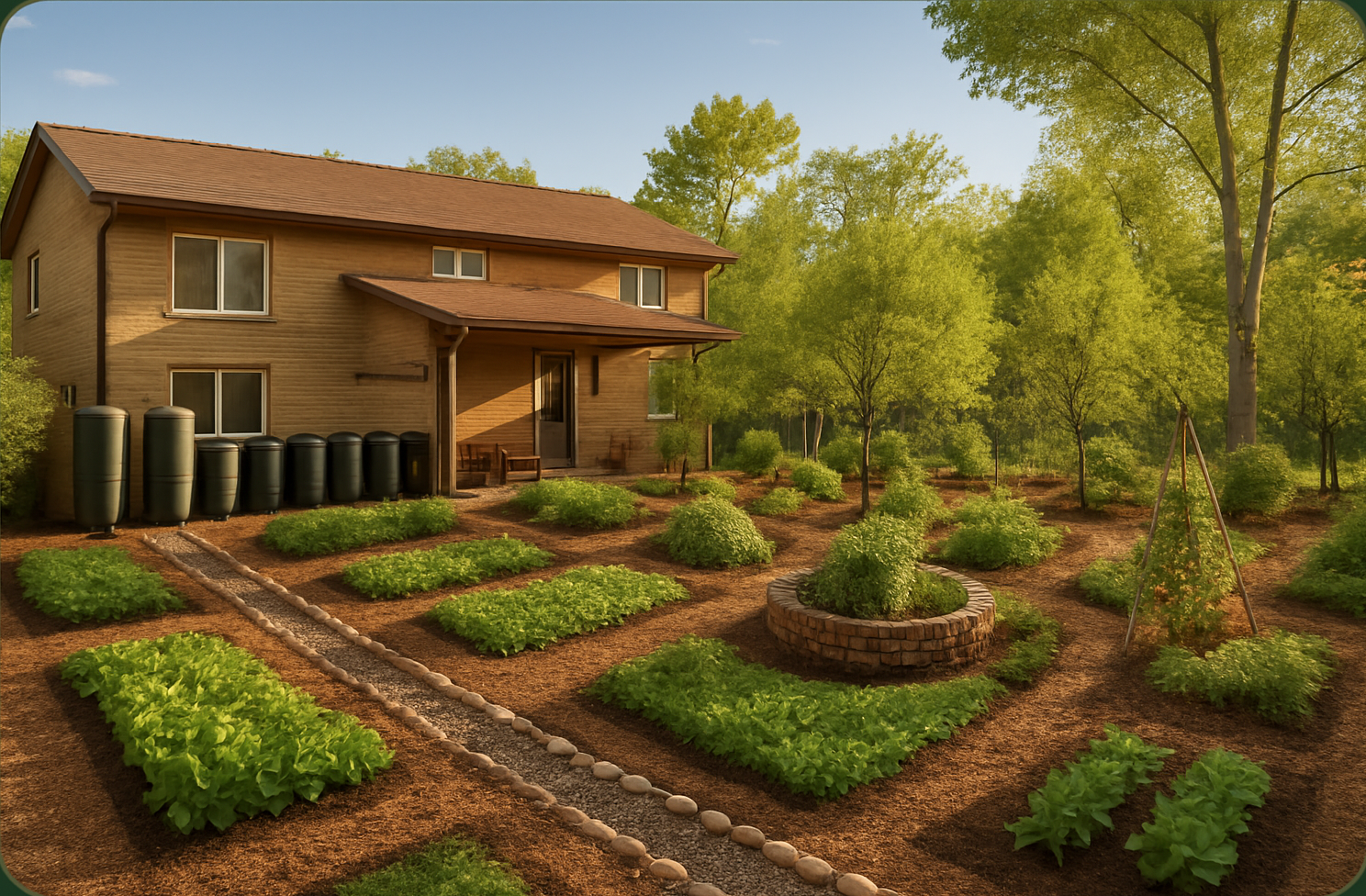
Sustainable landscaping is landscape design that works with nature instead of against it: it minimizes inputs like water, fuel, and synthetic chemicals, builds healthy living soil, supports wildlife, and regenerates the land rather than degrading it. Done right, it is not a compromise on beauty or tidiness. It is a yard that costs less to run, holds up better to drought and heat, and actually gives something back.
Most conventional yards do the opposite. A typical suburban landscape drinks water, demands fertilizer and weekly mowing, sheds chemical runoff, and produces nothing but clippings. Sustainable landscaping flips that equation. And the most sustainable version of all is a productive one: a designed, regenerative yard that grows clean food while it heals the ground beneath it.
This guide walks through the core sustainable landscaping ideas, real examples of each, and how they add up to a yard that reflects your values and feeds your family.
What makes a landscape sustainable
A landscape earns the word "sustainable" when it meets a few tests:
- It uses less water than it would as a conventional lawn-and-shrub yard.
- It needs few or no synthetic inputs — no routine synthetic fertilizer, no herbicides, no pesticides.
- It builds soil instead of depleting it, so the ground gets richer and holds more water each year.
- It supports life — pollinators, birds, and beneficial insects have food and shelter.
- It is resilient — it survives heat, drought, and pests without constant rescue.
The best designs go past "do no harm" into regenerative territory, where the yard is measurably healthier every season. That is the difference between a landscape that merely survives and one that thrives.
Sustainable landscaping ideas and examples
Here are the highest-impact ideas, with examples of what each looks like in a real yard.
1. Lose or shrink the lawn
Turfgrass is the thirstiest, highest-maintenance, lowest-value part of most yards. You do not have to rip out every blade, but shrinking the lawn is the single biggest lever you can pull.
Examples: Replace a front lawn with a low-water planting bed of grasses and perennials. Keep a small, defined patch of turf where the kids actually play, and convert the rest to garden. Swap a parking-strip lawn for a drought-tolerant groundcover that never needs mowing.
2. Design for water, not against it
Water-wise design means choosing plants and layouts that thrive on the rainfall your region actually gets, then irrigating efficiently for the rest. This is where the biggest utility savings live.
Examples: Group plants by water need so you are not overwatering the tough ones to keep the thirsty ones alive. Install drip irrigation on a smart timer instead of overhead spray. Mulch every bed heavily to slow evaporation and keep roots cool.
3. Plant native and climate-adapted species
Native and climate-adapted plants evolved to handle your local soil, rainfall, and temperature swings. Once established, they need little water and no coddling — and they feed local pollinators and birds that non-natives often ignore.
Examples: A bed of native flowering perennials that blooms through the season with almost no irrigation. A climate-adapted shade tree instead of a thirsty ornamental that struggles in your heat. Native grasses that hold slopes and never need mowing.
4. Grow food, not just decoration
This is the through-line of everything we do at Restore Eden. Ornamental plants take water and care and give back only their looks. Productive plants give you all of that plus clean food. And the good news is that beautiful, edible plantings can be every bit as gorgeous as a purely ornamental bed.
Examples: Fruit and nut trees as the shade and structure of the yard instead of sterile ornamentals. Berry bushes as the privacy hedge. Herbs and perennial vegetables tucked into the flower beds. An espaliered fruit tree along a fence line where a plain shrub used to be.
5. Build healthy, living soil
Healthy soil is the foundation of a sustainable yard. It holds water like a sponge, feeds plants without bagged fertilizer, and stores carbon. You build it by feeding the life in it, not by dumping chemicals on it.
Examples: Start a compost pile or bin and return kitchen and yard waste to the ground. Top-dress beds with compost each season instead of synthetic fertilizer. Leave fallen leaves as mulch in beds. Keep soil covered and planted so it never bakes bare in the sun.
6. Capture the rain
Rain that runs off your roof and driveway into the storm drain is free irrigation you are throwing away. Capturing and directing it keeps your plants watered and reduces flooding and runoff.
Examples: Route downspouts into rain barrels or a cistern. Shape a shallow rain garden in a low spot to catch and soak in roof runoff. Build gentle swales that slow water and let it sink into the soil instead of rushing off the property.
7. Make room for pollinators and wildlife
A sustainable yard is a living one. Pollinators, birds, and beneficial insects do free work — pollinating your food plants and eating the pests — when you give them habitat.
Examples: A patch of flowering plants that blooms from spring through fall so there is always food. A small brush pile or native grasses for shelter. Skipping the pesticides so the beneficial insects survive to do their job.
8. Cut the synthetic chemicals
Synthetic fertilizers, herbicides, and pesticides are the opposite of sustainable. They pollute waterways, kill soil life and pollinators, and lock you into buying more every season. A well-designed yard does not need them.
Examples: Compost and living soil in place of synthetic fertilizer. Dense planting and mulch to crowd out weeds instead of spraying them. Encouraging beneficial insects instead of blanket-spraying for pests. This matters even more when your kids and pets play in the yard and you are eating what it grows.
9. Right plant, right place
Half of all landscape failure is putting a plant where it does not belong — sun-lovers in shade, thirsty plants on a dry slope, big trees under power lines. Matching each plant to its spot means it thrives with less intervention.
Examples: Shade-tolerant edibles under the tree canopy. Drought-tough plants on the hot, dry side of the house. Moisture-lovers in the low spot where water naturally collects.
Conventional yard vs. sustainable yard
Here is how the two approaches compare across the things that actually matter:
| Factor | Conventional landscape | Sustainable landscape |
|---|---|---|
| Water | High — regular irrigation, thirsty turf | Low — matched to climate, rain captured, drip-fed |
| Inputs | Synthetic fertilizer, herbicides, pesticides, fuel | Compost and living soil; few or no chemicals |
| Soil | Depleted, compacted, kept alive by additives | Built up each year, holds water, full of life |
| Output | Grass clippings and yard waste | Food, habitat, and beauty |
| Upkeep | Weekly mowing, spraying, feeding | Seasonal tending; less over time as it matures |
| Resilience | Fragile in drought and heat | Adapts and endures |
The pattern is clear. A conventional yard is a consumer — it takes water, money, fuel, and time, and produces waste. A sustainable yard is a contributor. And a regenerative, productive one is the most generous version of all.
The most sustainable landscape is a productive one
Here is the idea that ties this all together, and the one most "eco-friendly landscaping" advice quietly skips: the greenest possible yard is not a low-water gravel garden with a few tough shrubs. It is a living, food-producing ecosystem.
Think about what a purely decorative sustainable garden design does. At best, it takes very little and gives back beauty. That is good. But a food forest — a designed landscape modeled on a natural woodland, with layers of fruit and nut trees, berry shrubs, herbs, and groundcovers — does everything a sustainable garden does and produces clean food, year after year, with less work as it matures.
A food forest captures rain, builds soil, shelters pollinators, needs no synthetic chemicals, and shrugs off drought once established. It checks every sustainability box on this page. Then it hands your kids a bowl of berries picked from the backyard. That is the difference between a yard that consumes less and a yard that genuinely gives back.
This is regenerative sustainable landscaping in its fullest form: beautiful, low-input, and productive at the same time.
What this looks like as a done-for-you plan
If you are time-poor and values-driven, the good news is you do not have to become a permaculture hobbyist to have this. The ideas above are most powerful when they are designed together as a whole-property regenerative plan rather than added piecemeal. A cohesive plan makes sure the rain capture feeds the right beds, the edibles sit where they will thrive, and the whole thing looks intentional and polished from day one — not like a science project.
That is exactly what we do at the Restore Eden Project. We turn ordinary yards into regenerative, productive, beautiful food forests — designed and built for you here in Colorado, and available as detailed build-guides for households nationwide who want to do the work themselves.
We are also allergic to greenwashing. There is a lot of "eco-friendly landscaping" marketing that amounts to a bag of mulch and a native plant or two. Real sustainability shows up in how the whole system works: less water, no synthetic chemicals, richer soil each year, and food on the table. That is the standard we design to.
Start with the yard you have
You do not need acreage. Some of the most rewarding sustainable landscapes are small urban and suburban yards where a family reclaimed the lawn and turned it into something alive. Start where you are, prioritize the biggest levers — shrink the lawn, match plants to your climate, feed the soil, capture the rain — and layer in the productive plantings that make the whole thing pay you back.
If you would rather have it designed and done right the first time, that is what we are here for. See how beautiful, edible plantings can transform your yard, or book a consultation and we will map out a regenerative plan for your specific site, climate, and family.
A sustainable yard is worth having. A productive one is worth building.
Frequently asked questions
What are examples of sustainable landscaping?
Common examples include shrinking or removing a thirsty lawn, planting native and climate-adapted species, using water-wise design and drip irrigation, capturing rain, building living soil with compost, and adding pollinator habitat. The most complete example is an edible, productive yard that grows food while it regenerates the land. Each idea reduces inputs like water, fuel, and synthetic chemicals while making the space more alive.
Is sustainable landscaping more expensive?
Up front, a sustainable design can cost about the same as a conventional install, and sometimes more if you are replacing a large lawn or grading for rain capture. Over time it usually costs less, because it needs far less water, fertilizer, mowing, and replacement planting. A productive, food-growing yard can also return value in harvests, so the long-run math often favors it.
What is the difference between sustainable and regenerative landscaping?
Sustainable landscaping aims to do no harm and minimize inputs like water and chemicals. Regenerative landscaping goes a step further and actively rebuilds soil health, biodiversity, and productivity, so the land is better each year. A well-designed food forest is regenerative because it captures water, feeds the soil, and produces food at the same time.
Can a sustainable yard still look beautiful and tidy?
Yes. Sustainability is about how a landscape works, not a messy or wild look. With thoughtful design, defined edges, structure, and seasonal layers, an eco-friendly yard can look as polished as any traditional one, and often more interesting. Beauty and ecology are not a trade-off when the plan is done well.
How do I start making my landscaping more sustainable?
Start with the biggest levers: shrink the lawn, match plants to your climate and site, add drip irrigation, and feed the soil with compost instead of synthetic fertilizer. From there you can layer in rain capture, pollinator plantings, and edible species. A whole-yard plan up front saves money and avoids piecemeal fixes that fight each other.
Related guides
What is xeriscaping?
The real xeriscaping definition, the 7 principles, and how to make a low-water yard beautiful.
Drought-tolerant landscaping
How to build a lush, water-wise yard that thrives on a fraction of the water — the right plants, living soil, water-harvesting design, and mulch (no gravel desert required).
Landscaping with native plants
Why native plants make the most resilient, low-water, wildlife-friendly landscapes — and how to design with them (and pair them with edibles).
Want this designed into your land?
We design regenerative food forests — living soil, water, and plants working together — done-for-you in Colorado and guided nationwide.
Book your Eden Yard Audit™