Guide
How to build healthy soil
June 28, 2026 · 5 min read
Healthy soil is not dirt — it is a living ecosystem. A single teaspoon of healthy soil holds billions of bacteria, fungi, protozoa, and nematodes, all working together to feed your plants. Building healthy soil is really about rebuilding that life. Five regenerative practices do almost all of the work: keep the soil covered, keep living roots growing, feed it organic matter, stop tilling, and grow diversity. Below is how each one works — and the soil-food-web biology underneath that most gardening guides leave out.
What "healthy soil" actually means
Healthy soil has two things at once: good structure and abundant biology. Structure is the crumbly, aggregated texture that lets water soak in, air reach the roots, and moisture hold through dry spells. Biology is the soil food web — the microbes and the larger creatures that graze on them — that cycles nutrients into a form your plants can actually use. The two are linked: it is the biology, especially fungi and the sticky substances microbes produce, that builds the structure. Feed the life, and the structure follows.
1. Keep the soil covered
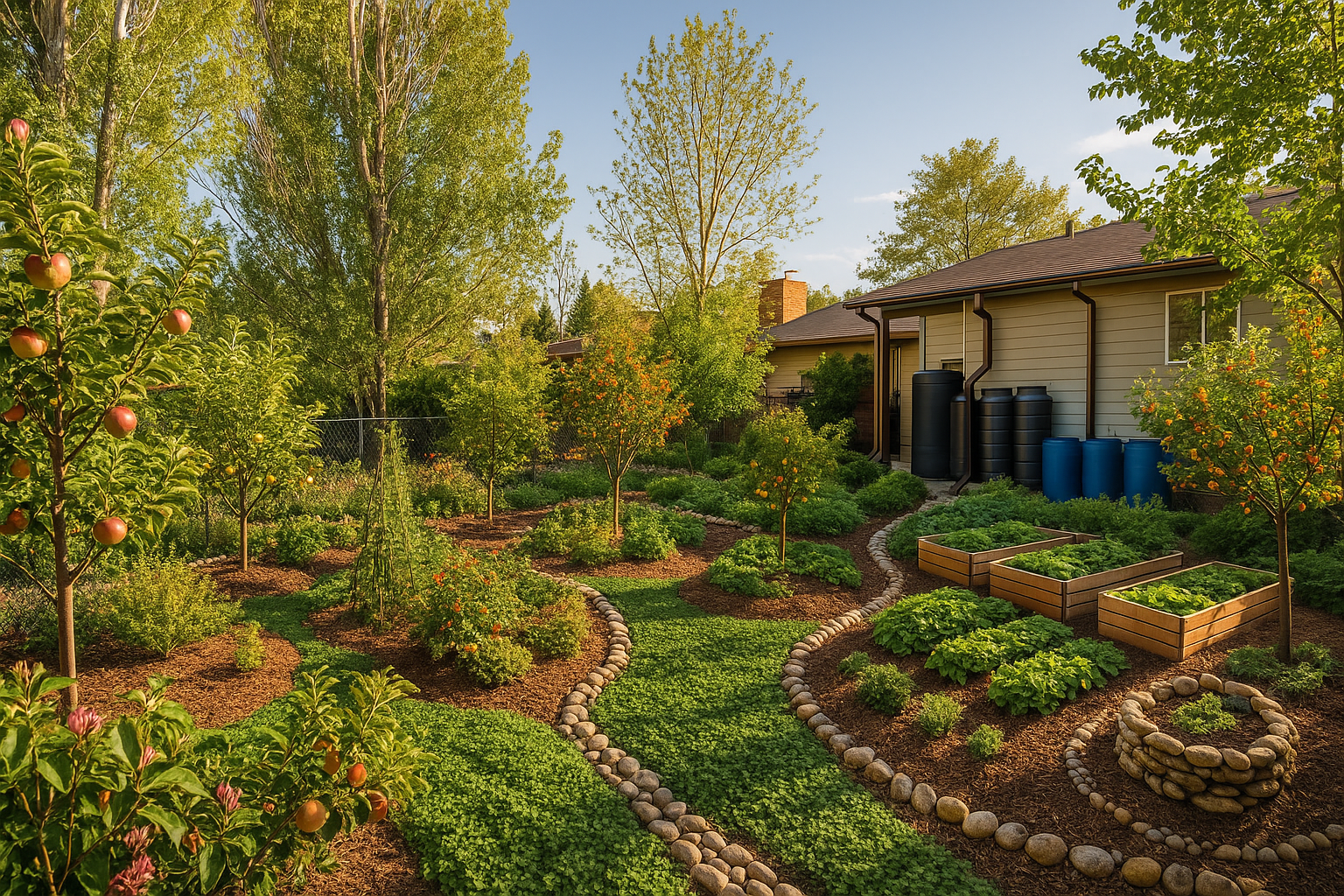
Bare soil is dying soil. Sun bakes it, rain compacts it, wind erodes it, and the biology near the surface cooks. In nature, soil is almost never naked — it is always under leaf litter or living plants. Mirror that: cover every inch with a few inches of mulch (wood chips, straw, leaves) or a living cover crop. Cover holds moisture, moderates temperature, suppresses weeds, and feeds the soil life as it breaks down.
2. Keep living roots in the ground year-round
This is the practice most people miss, and it may be the most powerful. Living roots leak sugars — exudates — into the soil, and those sugars are the currency that feeds the microbes right at the root zone. When the ground sits empty between crops, that food supply shuts off and the biology starves. Plant a cover crop, an overwintered crop, or perennials so something is always growing. Year-round living roots keep the soil food web fed and working.
3. Feed the soil with organic matter
Compost is the simplest, most reliable way to build soil. It adds both the organic matter that becomes humus and a living inoculant of beneficial microbes. You do not need to truck it in by the yard, either: leave crop residues and roots in place after harvest, chop-and-drop spent plants as mulch, and let leaves stay where they fall. Every bit of organic matter you return is food for the soil and future fertility you do not have to buy.
4. Stop tilling
Tilling feels productive, but it is one of the most damaging things you can do to soil. It shatters the soil structure and the fungal networks that took years to build, exposes stored carbon to burn off as the disturbed microbes binge on oxygen, and brings up a fresh flush of weed seeds. The result is a brief boost followed by a long decline — looser at first, then harder and more compacted than before. Build healthy soil by disturbing it as little as possible; let roots, worms, and fungi do the loosening from below.
5. Grow diversity
A monoculture feeds a narrow slice of the soil food web; a diverse planting feeds all of it. Different plants release different root exudates and partner with different microbes, so the more variety you grow — and the more you mix species together rather than planting in blocks — the richer and more resilient the underground community becomes. Diversity above ground builds diversity below it.
The part most guides miss: the soil food web
Most soil advice stops at practices. But why do those practices work? Because they feed the soil food web — the web of organisms that does the actual job of feeding your plants. The science here, pioneered by soil microbiologist Dr. Elaine Ingham, reframes fertility entirely.
It works like this: bacteria and fungi pull nutrients out of organic matter and the mineral fraction of the soil and lock them inside their bodies. On their own, those nutrients would stay locked up. But then the grazers arrive — protozoa, beneficial nematodes, and microarthropods eat the bacteria and fungi, and in doing so release the excess nutrients as plant-available food, right next to the roots, exactly where and when the plant needs it. The plant does not have to chase nutrients through the soil; the biology delivers them to the doorstep.
This is why a living soil keeps producing for free, year after year, while a chemically managed soil needs more inputs every season. Synthetic fertilizer feeds the plant directly but starves and degrades this food web, so the soil grows ever more dependent on the bag. Build the biology instead, and the soil feeds itself. (Different plants even prefer different ratios of fungi to bacteria — annual vegetables favor more bacterial soils, while trees and perennials favor more fungal ones — which is why mulch and compost, both fungal-friendly, are the backbone of a regenerative food forest.)
Conventional vs. regenerative soil care
| Conventional | Regenerative (living soil) | |
|---|---|---|
| Goal | Feed the plant | Feed the soil biology |
| Fertility | Bagged synthetic NPK | Compost + the soil food web |
| Over time | Degrades; needs more inputs | Improves; needs fewer inputs |
| Soil cover | Often bare | Always mulched or planted |
| Tillage | Routine | Minimal to none |
| Result | Dependency | Self-sustaining fertility |
How long does it take?
You will see early signs — better water absorption, more earthworms, a darker, crumblier texture — within a single season. A genuinely living, fertile soil takes about two to four years of consistently covering, feeding, not tilling, and keeping roots in the ground. The beauty is that it compounds: each season the biology gets stronger and does more of the work, until the soil is quietly feeding your plants on its own.
That is the foundation everything else grows from. If you want a property designed around living soil from the ground up — water, plants, and biology working together — that is exactly what our regenerative property design is built to do.
Frequently asked questions
How long does it take to build healthy soil?
You can see meaningful change in a single season — better moisture-holding, more earthworms, darker color — but rebuilding a truly living, fertile soil is a 2–4 year arc. The more consistently you keep the soil covered, fed, undisturbed, and planted, the faster the soil biology recovers and starts doing the work for you.
What is the fastest way to improve poor soil?
Stop bare soil and start feeding the biology: cover every inch with mulch or a cover crop, add a layer of quality compost, and stop tilling. Those three moves, done together, kick-start the soil food web faster than any single amendment — and they cost almost nothing.
Do I need to add fertilizer to build healthy soil?
Less than you think. Synthetic fertilizer feeds the plant but bypasses — and over time degrades — the soil biology that should be feeding it for free. A living soil cycles nutrients from organic matter and the mineral fraction of the soil itself. Compost and biology, not bagged NPK, are what build lasting fertility.
Is tilling always bad for soil?
Heavy, repeated tillage is the single most destructive thing for soil structure and biology — it shatters the fungal networks and aggregates that store water and air, and burns through organic matter. Light surface cultivation has its place, but the goal of building healthy soil is to disturb it as little as possible and let roots and biology do the loosening.
Related guides
Nutrient density: why soil makes food more nutritious
What nutrient density really means, and why soil and freshness matter as much as the organic label.
Carbon sinks, explained
What a carbon sink is, clear examples, and how your yard can become one.
Permaculture for beginners
What permaculture actually is, its core ethics and principles, and a simple, beginner-friendly path to start designing a regenerative landscape.
Want this designed into your land?
We design regenerative food forests — living soil, water, and plants working together — done-for-you in Colorado and guided nationwide.
Book your Eden Yard Audit™