Guide
The 12 permaculture principles
June 30, 2026 · 4 min read
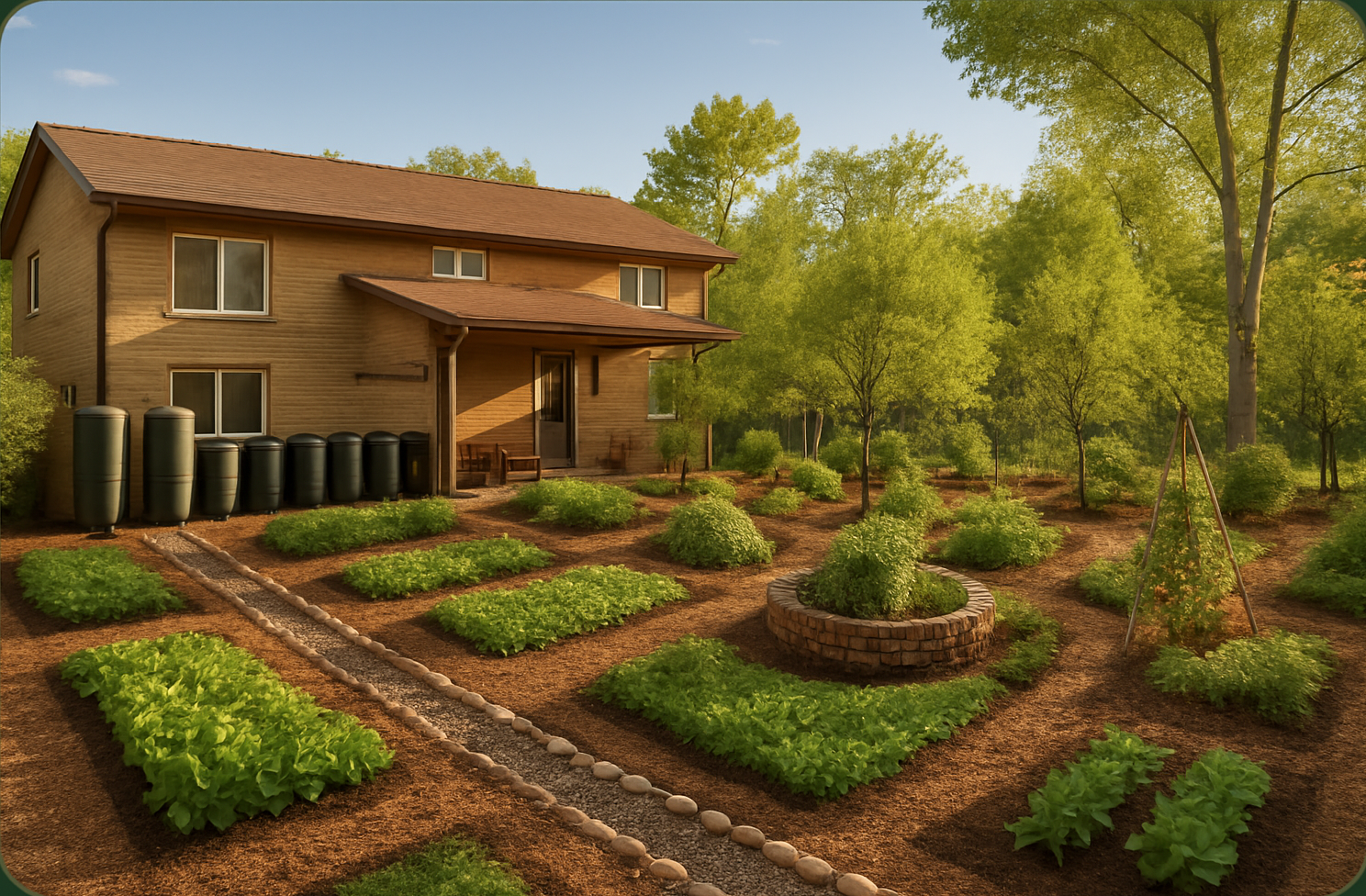
The 12 permaculture principles are practical design rules — coined by David Holmgren — for building landscapes that produce food, water, and habitat while getting more self-sufficient over time. They are not gardening tips so much as a way of thinking, and they apply whether you are planning a single raised bed or a whole property. If you are new to the wider framework these principles belong to, start with what permaculture is. Below are the three ethics that anchor them, then all twelve principles with a concrete way to use each one.
The three ethics
Before the principles come three ethics that answer why we design this way. Earth care means tending soil, water, and living systems so they get healthier, not more depleted. People care means the design has to actually feed and support the humans using it. Fair share (sometimes "return of surplus") means capping our take and cycling the extra — seeds, compost, harvest, knowledge — back into the system. Every principle below serves at least one of these. If you are brand new to the idea, our plain-language intro to regenerative design is a gentler starting point.
The 12 design principles
1. Observe and interact. Spend a full season watching before you dig — note where water pools, where frost lingers, where the afternoon sun bakes. A map of your yard's real behavior will save you from expensive guesses.
2. Catch and store energy. Capture resources when they are abundant so you have them in lean times. That looks like collecting roof runoff in tanks and swales, building soil that holds moisture, or letting a south-facing wall bank winter heat.
3. Obtain a yield. A design has to feed you — literally or otherwise — or you will abandon it. Plant a few fast, reliable producers like herbs, greens, or berries early so you are eating something in year one, not just year five.
4. Apply self-regulation and accept feedback. Build in limits and then listen to what the land tells you. If a bed keeps failing, that is feedback: change the plant, the placement, or the water before you fight the same battle a third season.
5. Use and value renewable resources and services. Lean on what regenerates on its own instead of what you have to keep buying. Let chickens turn compost, plant nitrogen-fixers to feed the soil, and use living mulch instead of bagged fertilizer where you can.
6. Produce no waste. Treat every "waste" as an unused resource. Kitchen scraps become compost, fallen leaves become mulch, greywater feeds fruit trees, and prunings become habitat piles — nothing leaves the property that could have fed it.
7. Design from patterns to details. Start with the big picture — sun, slope, water flow, access — and fill in the specifics afterward. Decide where your zones and paths go before you obsess over which tomato variety goes in which corner; our whole-property design approach works exactly this way.
8. Integrate rather than segregate. Place elements so they help each other instead of isolating each function. Grouping mutually supportive plants into companion planting guilds around a fruit tree — fixers, mulchers, pest-confusers — is this principle made visible.
9. Use small and slow solutions. Start modest and let success compound; small systems are easier to fix and cheaper to get wrong. Perfect one keyhole bed before you terrace the whole slope, and grow outward from what already works.
10. Use and value diversity. A varied system is a resilient one — pests, disease, and bad weather rarely take out everything at once. Mix species, varieties, and functions so a single failure never empties the pantry.
11. Use edges and value the marginal. The boundary between two systems — pond and land, forest and clearing — is where the most life happens. Curved bed edges, the sunny strip along a fence, and the transition zones of a layered food forest are prime, productive real estate most people ignore.
12. Creatively use and respond to change. Design for the world as it will be, not just as it is. When a tree falls or a dry year hits, treat it as an opening — more light for a garden, a reason to add water storage — rather than only a loss.
Putting the principles to work
Read together, the principles keep circling back to one habit: watch first, intervene lightly, and let the system do more of the work over time. You do not need to apply all twelve at once. Pick two or three that fit your biggest problem — usually water, soil, or too much upkeep — and start there. Good soil that stays alive and spongy is where most successful designs begin, because it quietly powers half the other principles.
If you want to see the ideas in a finished landscape rather than a list, browse a few real regenerative projects to watch the principles overlap in practice.
The principles are simple to name and genuinely hard to weave together across a whole property — reading water flow, sequencing plantings, and stacking functions so the pieces support each other. If you would rather have that mapped for you, our team can turn your site into a complete regenerative design built on exactly these principles, whether we install it in Colorado or hand you a build guide anywhere in the country.
Frequently asked questions
What are the 12 permaculture principles?
They are a set of design guidelines articulated by David Holmgren: observe and interact, catch and store energy, obtain a yield, apply self-regulation and accept feedback, use and value renewable resources, produce no waste, design from patterns to details, integrate rather than segregate, use small and slow solutions, use and value diversity, use edges and value the marginal, and creatively use and respond to change. Together they help you design landscapes that work with nature instead of against it.
What is the difference between the permaculture ethics and the principles?
The three ethics — earth care, people care, and fair share — are the moral foundation that answers why you design a certain way. The twelve principles are the practical how: repeatable design moves you apply to a garden, yard, or farm. Ethics set the direction; principles do the work.
Do I have to use all 12 principles at once?
No. Most projects only lean on a handful at a time, and that is normal. Start by observing your site and obtaining a small early yield, then layer in others as your design matures. The principles are a checklist to think with, not a set of rules to satisfy all at once.
Who created the permaculture principles?
Permaculture was co-founded in the 1970s by Australians Bill Mollison and David Holmgren. The commonly cited list of twelve design principles comes from Holmgren's 2002 book Permaculture: Principles and Pathways Beyond Sustainability, which distilled the original ideas into a memorable framework.
Related guides
Permaculture for beginners
What permaculture actually is, its core ethics and principles, and a simple, beginner-friendly path to start designing a regenerative landscape.
What is permaculture?
The complete plain-English guide to permaculture — what it is, where it came from, its ethics and principles, its core techniques, and how to use it on your own land.
What is xeriscaping?
The real xeriscaping definition, the 7 principles, and how to make a low-water yard beautiful.
Want this designed into your land?
We design regenerative food forests — living soil, water, and plants working together — done-for-you in Colorado and guided nationwide.
Book your Eden Yard Audit™