Guide
Permaculture for beginners
June 29, 2026 · 5 min read
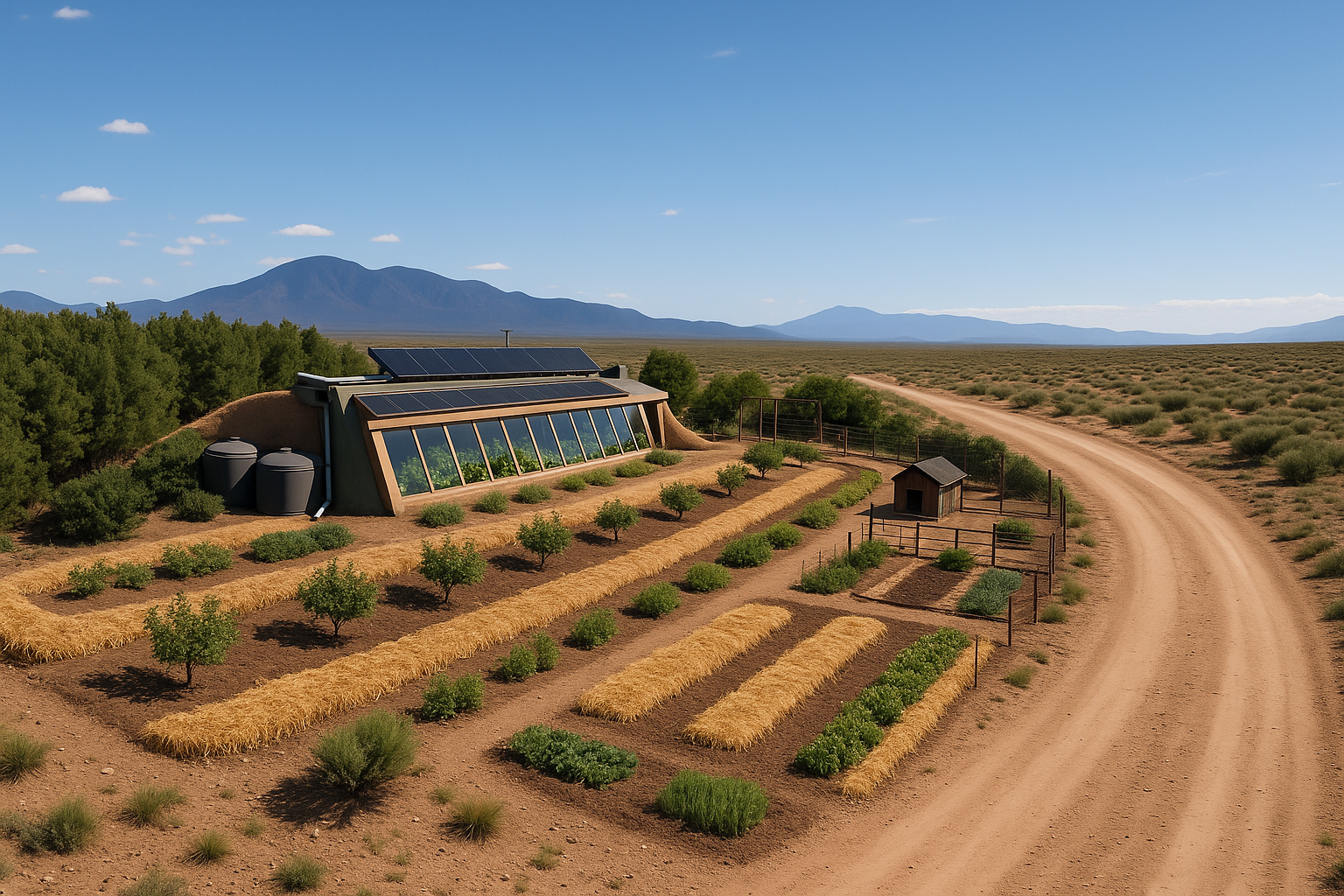
Permaculture is a design system for landscapes that work like nature — producing food, building soil, and harvesting their own water with less work every year. The name blends "permanent," "agriculture," and "culture," and the idea is simple even if the word sounds technical: instead of fighting nature each season with tilling, spraying, and constant watering, you design your land so its parts cooperate the way a forest sustains itself. For a beginner, permaculture isn't a set of rules to memorize — it's a way of thinking that you can start applying to a single garden bed this weekend. (For the fuller definition and history behind the idea, see what permaculture is.) Here's the plain-language introduction.
What permaculture actually is
Permaculture was developed in the 1970s by Bill Mollison and David Holmgren as "permanent agriculture" — a response to the way industrial farming was destroying soil and using enormous inputs to do it. Their insight was that natural ecosystems already solve every problem a farmer fights: a forest builds deep soil, holds water, recycles all its own nutrients, resists pests, and needs no one to plant or weed it. So why not design our food systems to work the same way?
That's the whole idea. Permaculture is the practice of designing landscapes — and, more broadly, the way we live — so they mimic the resilience and self-sufficiency of natural systems. It applies to a food forest, a backyard garden, a whole homestead, even how you arrange a home for energy and water. At its heart it is about relationships: placing each element so it supports the others, until the whole system needs very little from you to keep producing.
The three ethics of permaculture
Everything in permaculture rests on three simple ethics:
- Earth care — protect and regenerate the living systems we depend on: soil, water, forests, and biodiversity.
- People care — meet human needs, starting with the most basic: food, water, shelter, and community.
- Fair share — take only what you need and return the surplus (of food, seeds, knowledge, and resources) back into the system.
These aren't decoration. They're the test every design decision passes through: does this care for the earth, care for people, and share the surplus fairly?
The core principles, made practical
David Holmgren distilled permaculture into twelve design principles. You don't need to memorize them — but a handful do most of the work for a beginner, and they're worth understanding:
- Observe and interact. Before you build anything, watch your land. Where does the sun fall in summer and winter? Where does water pool or run off? Where does the wind hit hardest? A season of observation prevents years of mistakes.
- Catch and store energy. Capture the resources that flow through your site when they're abundant — rainwater into the soil and tanks, sunlight into plants and warm walls, organic matter into compost — so you have them when they're scarce.
- Produce no waste. In nature there is no waste; every output is another system's input. Kitchen scraps become compost, fallen leaves become mulch, "weeds" become chop-and-drop fertility.
- Use and value diversity. A diverse system is a resilient one. Many species, stacked in layers, mean steadier yields and fewer pests than any monoculture.
- Use edges and stack functions. The most productive zone in nature is the edge — where forest meets meadow, or pond meets land. And every good element does several jobs: a tree gives fruit, shade, windbreak, and habitat all at once.
The practices that matter most for beginners
Translate those principles into the ground and a few practices carry most of the value:
Build living soil. Healthy soil is the foundation of everything in permaculture. Feed it with compost and mulch, keep it covered, and stop tilling, and the soil biology will feed your plants for free. (Our guide on how to build healthy soil goes deep on this.)
Harvest water. Slow, spread, and sink rainfall into your land with swales, basins, and mulch, and store some in tanks. In dry climates especially, rainwater harvesting is the difference between a thriving system and a struggling one.
Plant perennials in layers. Trees, shrubs, herbs, and groundcovers stacked together — a food forest — produce far more per square foot than single-layer planting, and come back year after year with little replanting.
Design by zones. Place things by how often you use them: herbs and salad greens right by the kitchen door (zone 1), the orchard further out, wilder areas at the edge. Good placement saves more labor than any tool.
How to start permaculture (a beginner's path)
The biggest mistake beginners make is trying to do everything at once. Permaculture rewards starting small and observing. A simple path:
- Observe your site for a season — sun, water, wind, and what already grows.
- Start one bed. Build the soil, mulch it heavily, and plant a few perennials and herbs you'll actually use.
- Catch water. Add a rain barrel or shape a simple swale to direct runoff into your planting instead of away from it.
- Stack and expand. Add layers — a fruit tree with berries and groundcover beneath it — and grow outward from your first success.
- Close the loops. Compost your scraps, save your seeds, and let the system start feeding itself.
You don't need acreage, money, or expertise to begin — just one well-observed, well-cared-for bed, and the willingness to let nature do more of the work.
When you're ready to design the whole property
Starting small is the right way to learn permaculture. But when you're ready to design an entire yard or property as one integrated system — water, soil, structures, and a full layered food system working together — that's exactly what we do. Our food forest design service turns the principles above into a custom, to-scale plan for your land: done-for-you in Colorado, or a complete design-and-build-guide package anywhere in the country.
Frequently asked questions
What is permaculture in simple terms?
Permaculture is a design system for creating landscapes that work like natural ecosystems — producing food, building soil, and capturing water with less and less work over time. The word combines 'permanent' and 'agriculture' (and 'culture'). In practice it means designing your land so its parts support one another, the way a forest sustains itself, instead of fighting nature every season.
How do I start permaculture as a beginner?
Start by observing your site for a season — where the sun, water, and wind move. Then start small: build your soil with compost and mulch, capture rainwater, and plant a few perennials you'll actually use. Expand outward from there. You don't need land, money, or expertise to begin — you need one bed, observed and well cared for.
What's the difference between permaculture and gardening?
Gardening is growing plants; permaculture is designing a whole system. A permaculture design considers water, soil, sun, structures, and how every element relates to the others — so the garden, the home, the animals, and the landscape all work together. Gardening is one activity inside the bigger design that permaculture provides.
Can you do permaculture in a small backyard?
Yes. Permaculture is about design principles, not acreage. The same ideas — stacking plants in layers, capturing water, building living soil, and placing things by how often you use them — apply just as well to a small urban backyard as to a rural homestead. Some of the most productive permaculture systems are tiny.
Related guides
The 12 permaculture principles
David Holmgren's 12 design principles and the 3 ethics behind them, each explained with a concrete example a homeowner can actually use.
What is permaculture?
The complete plain-English guide to permaculture — what it is, where it came from, its ethics and principles, its core techniques, and how to use it on your own land.
What is regenerative agriculture?
A plain-language guide to regenerative agriculture: what it means, its core principles and practices, and how the same ideas work at any scale.
Want this designed into your land?
We design regenerative food forests — living soil, water, and plants working together — done-for-you in Colorado and guided nationwide.
Book your Eden Yard Audit™