Guide
What is xeriscaping?
July 3, 2026 · 7 min read
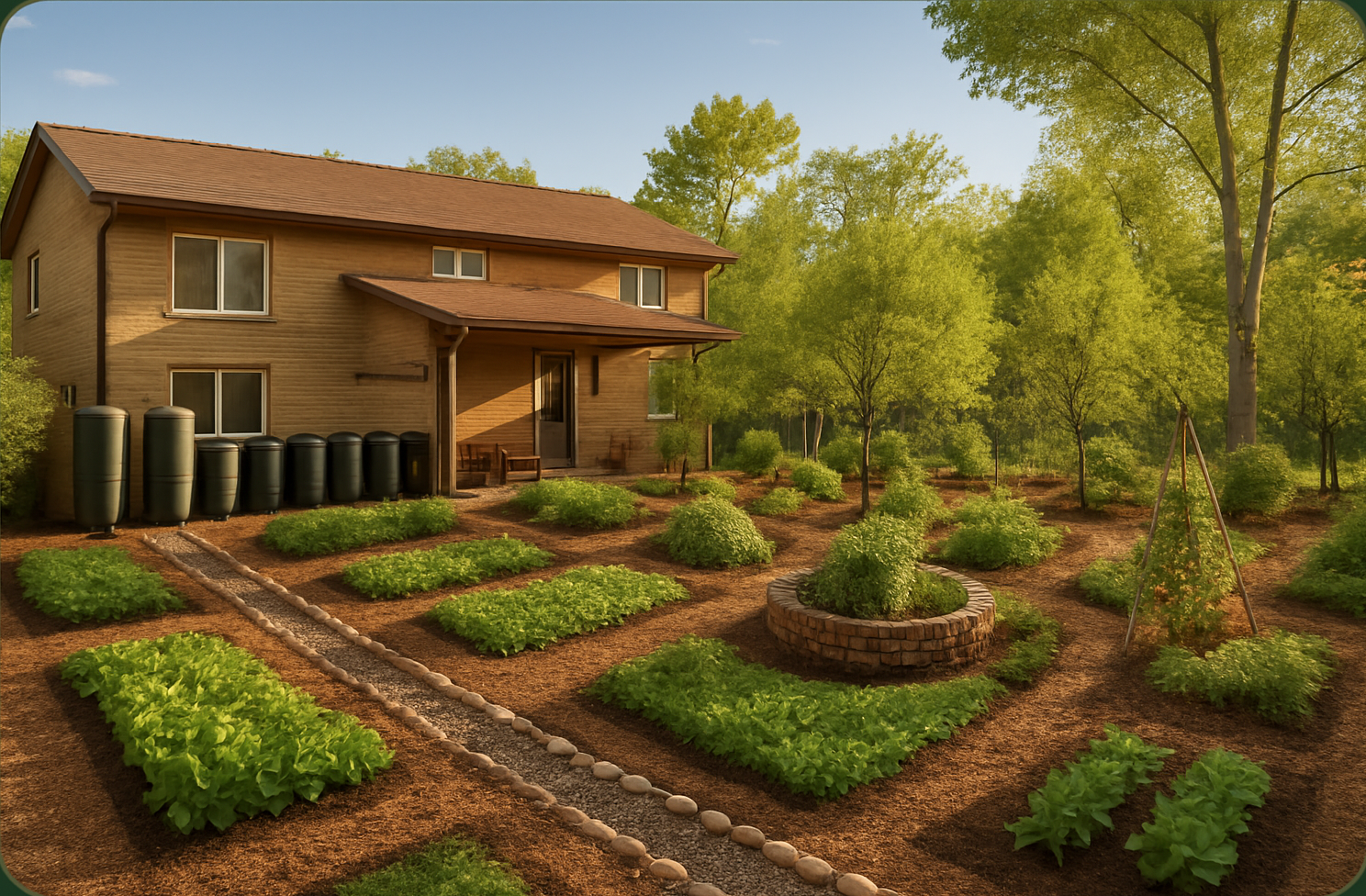
Xeriscaping is a style of landscape design that dramatically reduces outdoor water use by pairing drought-tolerant plants, healthy soil, smart irrigation, and mulch into a yard that stays green on a fraction of the water a traditional lawn demands.
If your summer water bill keeps climbing and every drought headline makes you glance nervously at your thirsty lawn, you are exactly who this approach was built for. The good news: going water-wise does not mean surrendering your yard to a field of gravel. Done right, it means a landscape that is lower-maintenance, lower-cost, and often more beautiful than what you have now, and one that can even feed your family.
Let us clear up what this word actually means, correct a stubborn myth, and walk through how to build a yard that thrives on very little water.
The xeriscaping definition (and the myth to unlearn)
The word comes from the Greek xeros, meaning dry, joined with landscape. So xeriscaping literally means dry landscaping, better understood as water-wise landscape design. The term was coined in Colorado in the early 1980s, during a drought, by a water utility looking for a smarter way to keep yards attractive without draining reservoirs.
Here is the confusion that trips up almost everyone: people hear the word and think zero-scaping, as in zero plants, zero effort, zero life. They picture a moonscape of crushed rock, a couple of sad cacti, and landscape fabric baking in the sun. That is not xeriscaping. That is a rock yard, and honestly, it often looks bleak and can even make your home hotter by radiating heat.
A real xeriscape is the opposite of barren. It is layered and alive: flowering perennials, silvery drought-tolerant shrubs, ornamental grasses that catch the light, groundcovers that knit the soil together, and shade trees. The difference is not fewer plants. The difference is the right plants, arranged and cared for so the whole yard sips water instead of guzzling it.
The 7 principles of xeriscaping
Water-wise landscaping is usually organized around seven principles. Together they form a system, not a checklist, and each one supports the others.
1. Planning and design
Everything starts here. Before a single plant goes in the ground, a good design maps your yard's sun and shade, slopes, wind, soil, and how water moves across the property when it rains. It groups the yard into zones based on how much water each area truly needs. Skip this step and you end up watering a whole yard to satisfy its thirstiest corner.
2. Soil improvement
Healthy soil is a water bank. Compacted, lifeless dirt sheds water and starves roots. By adding compost and building soil life, you increase the ground's ability to hold moisture and deliver it slowly to plant roots. Better soil means you water less often, and what you do apply goes further.
3. Practical turf reduction
Lawns are the single thirstiest thing in most yards, and much of that grass is never actually used. The idea is not always to rip out every blade, but to shrink turf to the areas you genuinely use, like a play space for kids, and replace the rest with plantings that need a fraction of the water. This one move usually accounts for the biggest savings.
4. Appropriate plant selection
This is the heart of it. Choose plants adapted to your climate and rainfall so they can largely fend for themselves once established. That means leaning on drought-tolerant plant choices and especially native plants that evolved in your region and already know how to handle its dry spells and temperature swings. Group plants with similar water needs together so irrigation stays efficient.
5. Efficient irrigation
Water-wise does not always mean no water; it means the right water in the right place. Drip irrigation and soaker lines deliver moisture directly to roots with almost no waste from evaporation or overspray, unlike sprinklers that mist the pavement and the breeze. Watering deeply and less often trains roots to grow down, making plants far more resilient.
6. Mulch
A layer of mulch is one of the simplest, highest-return moves in the whole system. It shades the soil, slows evaporation, suppresses weeds, and moderates temperature so roots stay comfortable. Organic mulches like wood chips also break down over time and keep feeding the soil. Bare ground in an arid climate is a leak; mulch plugs it.
7. Maintenance
A xeriscape is lower-maintenance, not no-maintenance. Instead of weekly mowing and constant watering, you settle into a lighter seasonal rhythm: occasional pruning, refreshing mulch, pulling the odd weed, and adjusting irrigation with the seasons. Less work, fewer inputs, and a yard that gets more established and self-sufficient every year.
Thirsty lawn vs. xeriscape
Here is how a conventional grass lawn stacks up against a well-designed water-wise yard.
| Feature | Traditional thirsty lawn | Water-wise xeriscape |
|---|---|---|
| Water use | High; often the biggest household water draw | Low; can cut outdoor water use dramatically |
| Maintenance | Weekly mowing, edging, constant watering | Seasonal pruning and mulch; no mowing |
| Inputs | Frequent fertilizer, weed control, fuel | Minimal once established |
| Summer resilience | Browns and struggles in heat and drought | Built to thrive in dry, hot conditions |
| Habitat value | Low; monoculture grass | High; flowers, natives, pollinators |
| Food production | None | Optional edibles, fruit, and herbs |
| Long-term cost | Rises with water rates and upkeep | Drops as the landscape establishes |
How much water and money does it save?
Outdoor irrigation is frequently the largest single use of water in a household, and in the arid West the lawn is the biggest culprit. Replace that turf with low-water plantings, feed them through efficient drip lines, and blanket the soil with mulch, and the savings compound.
Homeowners commonly see outdoor water use fall substantially once a xeriscape is established, which shows up directly on summer utility bills. On top of that, many water utilities in Colorado and across the arid West offer rebates for removing turf and installing water-wise landscaping, so the switch can partly pay for itself. Add in the money you stop spending on mowing, fertilizer, and fuel, and the long-term math tends to favor the water-wise yard by a wide margin. As water rates keep climbing, that gap only grows.
Beyond gravel: a xeriscape that feeds you
Here is where most guides stop and where we get interested. The standard picture of water-wise landscaping is decorative: pretty, drought-tolerant, and ornamental. That is fine. But a dry-climate yard can do so much more than look nice.
Many of the toughest, most drought-adapted plants on earth are also edible. Think fig, pomegranate, jujube, and certain apple and stone-fruit varieties suited to dry regions. Think rosemary, sage, thyme, and lavender that shrug off heat. Think perennial vegetables, hardy berries, and grape vines that ask for little once their roots go deep. A xeriscape can be genuinely productive, handing you fruit and herbs from a landscape that barely drinks.
The multiplier is water itself. When you pair low-water plantings with water-harvesting systems that capture rain from your roof and slow runoff across your property, you turn free rainfall into the fuel for the whole landscape. Shape the land to hold water where it falls, and even edible plants can thrive with very little from the tap. This is the leap from a water-saving yard to a water-producing one.
Zoom out further and you reach regenerative property design, where the whole property is read as a single system: how water enters, where it flows, how soil builds, how sun and shade fall, and how every plant earns its place by giving something back. A xeriscape is a beautiful entry point into that bigger vision, a first step toward a yard that is not just less thirsty but genuinely alive and self-reliant.
Is it hard to do?
Not if you plan well. The two most common mistakes are skipping the design phase and choosing the wrong plants, and both are avoidable. Start by mapping your yard, improving your soil, and shrinking the turf you never use. Choose plants matched to your climate, water them deeply through drip lines while they establish, and mulch generously. The first year or two ask for patience while roots reach down. After that, the yard largely takes care of itself.
For homeowners who would rather not learn all of this by trial and error, that is exactly the work we do. The Restore Eden Project turns yards into regenerative, water-wise, productive landscapes. In Colorado we handle the whole thing done-for-you, from design through build. Everywhere else, we provide the designs and build-guides so you can create your own water-wise landscape with confidence.
A yard that gives more than it takes
Xeriscaping is not about giving up a beautiful yard or resigning yourself to gravel. It is about designing a landscape that fits the place you actually live, one that stays green through drought, shrugs off rising water bills, needs far less of your weekend, and can hand your family fruit and herbs in the bargain. In the arid West especially, it is simply the smarter way to have a yard.
If you are ready to trade a thirsty lawn for a landscape that gives more than it takes, we would love to help. Book a consultation and we will map out a water-wise, productive yard built for your climate, your soil, and your life. Your yard can be beautiful, low-maintenance, and abundant all at once, and it can start with a single conversation.
Frequently asked questions
Is xeriscaping the same as zero-scaping?
No, and this is the most common mix-up. Xeriscaping comes from the Greek word xeros, meaning dry, and it describes a lush, living landscape designed to thrive on very little water. Zero-scaping (or zeroscaping) usually refers to a bare yard of rock and gravel with few or no plants. A true xeriscape is full of life, color, and often food.
Does xeriscaping mean just rocks and gravel?
Not at all. That is the biggest myth about water-wise landscaping. Gravel and rock can be part of the design, but a well-planned xeriscape is layered with drought-tolerant shrubs, perennials, ornamental grasses, groundcovers, and even fruit trees. The goal is a beautiful, living yard that simply drinks less water.
How much water and money can xeriscaping actually save?
Outdoor irrigation is often the single largest use of household water in arid regions, and lawns are the thirstiest part of the yard. By replacing turf with low-water plantings and efficient irrigation, a xeriscape can cut outdoor water use dramatically. Homeowners in the arid West commonly see a meaningful drop in their summer water bills once established.
Is a xeriscape low-maintenance?
It can be, once it is established. There is no weekly mowing, far less watering, and fewer inputs than a traditional lawn. The first year or two require attention while plants root in, but a mature xeriscape settles into a light seasonal rhythm of pruning, mulch top-ups, and occasional weeding.
Can a xeriscape grow food?
Yes, and this is where the approach gets exciting. Many drought-tolerant plants are also edible, including certain fruit trees, herbs, berries, and perennial vegetables suited to dry climates. With thoughtful design and rainwater capture, a low-water yard can feed your family while looking beautiful.
Related guides
Drought-tolerant landscaping
How to build a lush, water-wise yard that thrives on a fraction of the water — the right plants, living soil, water-harvesting design, and mulch (no gravel desert required).
Sustainable landscaping
Practical sustainable landscaping ideas and examples for a yard that gives back.
Landscaping with native plants
Why native plants make the most resilient, low-water, wildlife-friendly landscapes — and how to design with them (and pair them with edibles).
Want this designed into your land?
We design regenerative food forests — living soil, water, and plants working together — done-for-you in Colorado and guided nationwide.
Book your Eden Yard Audit™